







Key takeaways PII redaction only works on data that has been identified. Sensitive information can remain hidden in scans, images, handwritten content, metadata, and other unstructured data. LLMs introduce new paths for PII exposure. Prompts, document uploads, RAG systems, and training or fine-tuning datasets can all bring sensitive enterprise data into AI workflows. PII protection should happen before data reaches … Read More
PII in AI Training Data: Risks, Governance, and Protection
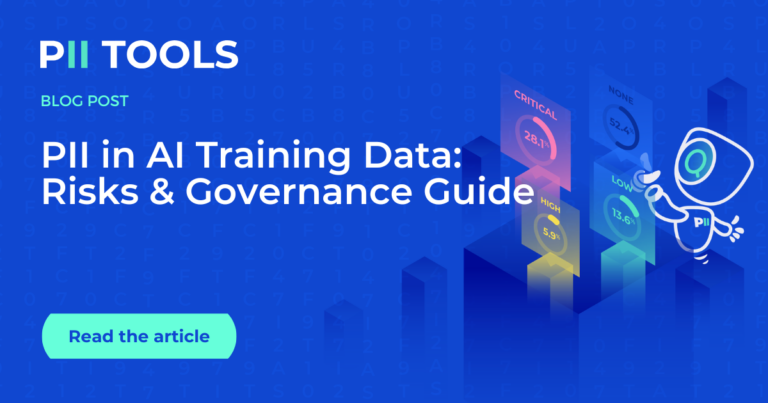
Key Takeaways PII can enter AI systems through training datasets, fine-tuning data, RAG sources, and user prompts. Language models can memorize aspects of their training data, making it important to identify and protect unnecessary PII before training. Unstructured data such as documents, emails, support tickets, and scanned files can contain PII that is difficult to identify at scale. Data discovery, … Read More
POPIA vs. AI Act vs. LGPD vs. GLBA for US Businesses
Key Takeaways U.S. businesses may face international privacy laws depending on where they operate and process data. GLBA protects financial information handled by covered U.S. financial institutions. LGPD and POPIA regulate personal data in Brazil and South Africa. The EU AI Act regulates AI based on risk and can also apply to U.S. companies. Data visibility is fundamental to compliance, … Read More
AI Redaction in 2026: How Automatic PII Redaction Tools Actually Work
Key Takeaways Modern AI redaction combines machine learning, OCR, and contextual analysis to detect and protect sensitive information beyond traditional pattern matching. AI can only redact the data it can first discover, making native OCR essential for scanned PDFs, images, and other unstructured documents. Enterprise AI redaction should support Private Cloud, on-premises, hybrid, and air-gapped deployments to ensure zero data … Read More
PII Detection Tools Compared: What Works in 2026?
Key Takeaways PII detection tools help organizations identify, classify, and protect sensitive data across file shares, cloud storage, databases, emails, and AI workflows. The most important capabilities in 2026 include OCR support, AI readiness, automated classification, Microsoft Purview integration, and support for unstructured data. Different PII scanning tools are designed for different use cases, from Microsoft 365 governance and insider-risk … Read More
Key Data Privacy Changes Shaping 2026
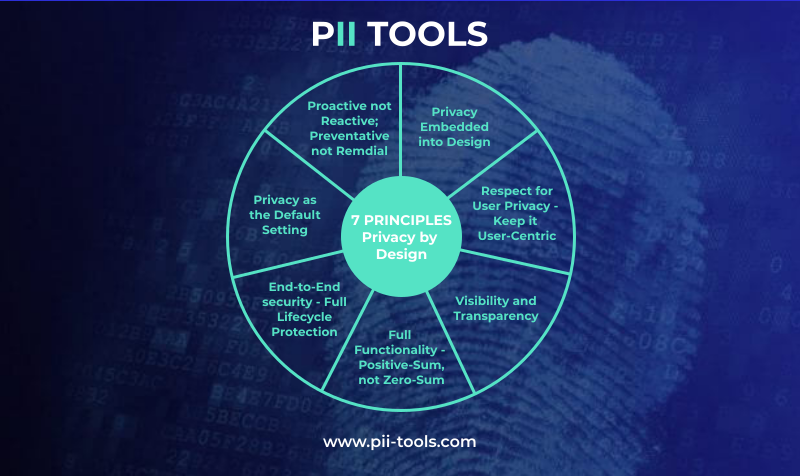
AI, Regulation, and the Rise of “Technical Truth” In 2026, data privacy is no longer a legal formality or a checkbox exercise; it’s a core component of business survival. Regulators have shifted their focus from “policies on paper” to “technical truth,” actively testing whether organizations can actually enforce the rights they claim to protect. The 2026 Regulatory Landscape: Beyond the … Read More
The Human Factor: How to Eliminate Data Breaches Caused by Employees
Part 1 of 3: Data Leak Basics (Part 2, The Perfect Employee Training; Part 3, 10-Point Data Security Checklist) Nearly 90% of breach incidents are caused by human error. This 3-part mini-series tackles the subject head-on, covering everything from root causes and prevention techniques to the perfect employee training. Let’s get started. What is a Data Leak? A data leak, … Read More