







Key Takeaways
- PII can enter AI systems through training datasets, fine-tuning data, RAG sources, and user prompts.
- Language models can memorize aspects of their training data, making it important to identify and protect unnecessary PII before training.
- Unstructured data such as documents, emails, support tickets, and scanned files can contain PII that is difficult to identify at scale.
- Data discovery, classification, minimization, redaction, masking, and access controls can reduce PII exposure across AI workflows.
- PII protection should continue beyond initial training, with continuous or scheduled monitoring as new data enters AI pipelines.
AI & Your PII
Artificial intelligence depends entirely on data. As organizations train, fine-tune, and deploy AI models using internal assets, one question becomes critical: What sensitive information is being fed into these systems?
AI training datasets can contain personally identifiable information (PII), from names and addresses to financial and health records. Without appropriate controls, this creates privacy, security, and compliance risks that can be difficult to remediate once a model is trained.
That means that protecting PII starts before training begins by identifying and protecting sensitive data the AI system does not need.

What Is PII in AI?
PII in AI refers to any personally identifiable information that is collected, processed, stored, or exposed during the development or operational use of an artificial intelligence system.
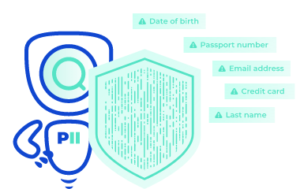
This includes direct identifiers, such as names, email addresses, Social Security numbers, and passport details, as well as other personal data, such as financial, health, employment, or location information, that can identify an individual on its own or when combined with other data points.
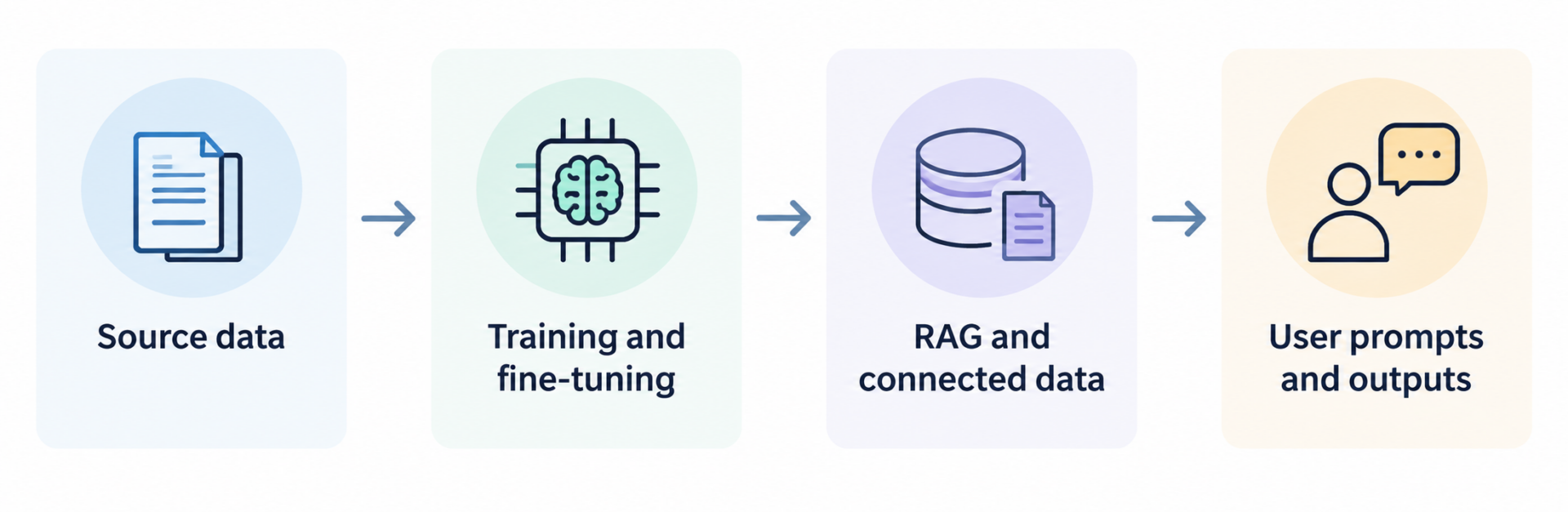
PII can enter an AI environment at multiple stages, making protection necessary across the entire AI data lifecycle.
How PII Enters AI Training Data
Modern AI systems can process enormous amounts of enterprise data. Organizations building custom large language models (LLMs), fine-tuning existing models, or implementing RAG pipelines need to account for several common sources of PII:
- Internal Unstructured Documents 📜: Contracts, PDFs, HR files, presentations, and scanned documents used for AI processing can contain PII embedded within otherwise useful content.
- Emails and Support Chats 📬: Customer conversations provide valuable natural-language data but can also contain names, phone numbers, payment details, addresses, and account information.
- Database Free-Text Fields 🗒️: While structured columns (like email or SSN) are relatively easy to isolate, free-text customer notes, ticket descriptions, and comment logs contain unformatted, unpredictable PII.
- Public Web Data 🛜: Web-scraped datasets can include public records, contact information, and other personal details alongside the content collected for AI training.
- Fine-Tuning Datasets 🗃️: Fine-tuning existing models with proprietary customer records, conversations, or internal documents can introduce sensitive information into the model development process.
- RAG and Connected Data 📱: AI applications retrieve context from enterprise knowledge bases and document repositories at runtime, potentially exposing sensitive files that were never part of the original training data.
Sensitive information can enter an AI system during training or become accessible to it at runtime. Organizations therefore need visibility and appropriate controls across both their training datasets and the enterprise data connected to AI systems.
Why PII in AI Training Data Creates High Risk
Using PII in AI training data creates challenges that differ from simply storing the same information in a conventional database or document repository.
1. AI Models Can Memorize Sensitive Information
AI models learn patterns and relationships rather than storing training data as searchable records. However, research shows that language models can memorize aspects of their training data and, under certain conditions, reproduce them in their outputs. Minimizing unnecessary PII before training reduces the risk of sensitive information resurfacing later.
2. Removing Source Data May Not Remove the Risk
Deleting the original source data after training does not necessarily remove its influence from an already trained model. This makes prevention particularly important, as identifying and protecting PII before training is significantly easier than addressing it afterward.
3. PII Can Be Exposed Through AI Outputs
PII can also become accessible through AI outputs, whether a model reproduces information memorized during training or a RAG-based application retrieves sensitive data from connected sources at runtime. Without appropriate controls, this can expose PII to users who should not have access to it.
What Types of PII Create Risks in AI?
Not all PII carries the same level or type of risk. The potential impact depends on the type of information involved and how easily it can identify or be linked back to an individual.
|
Category |
Examples |
Potential AI Risk |
|
Direct identifiers |
Name, SSN, passport number, driver's license number |
Direct identification and identity theft |
|
Contact information |
Email, phone number, physical address |
Identification, phishing, unwanted contact |
|
Financial information |
Bank account details, payment information, tax records |
Financial fraud and regulatory exposure (e.g., PCI DSS) |
|
Health information |
Patient IDs, diagnoses, medical records |
Exposure of highly sensitive protected health information (PHI) |
|
Online identifiers |
IP addresses, account IDs, device identifiers |
Tracking and re-identification |
|
Employment information |
Employee IDs, HR records, payroll information |
Employee privacy exposure and internal HR breaches |
|
Indirect Identifiers |
Age, location, employer, job title |
Re-identification when combined |
6 Steps to Protect PII from AI
Protecting PII in AI starts before sensitive data reaches a model, training dataset, or connected RAG environment. Organizations can reduce exposure by building data discovery and protection directly into their AI pipelines.
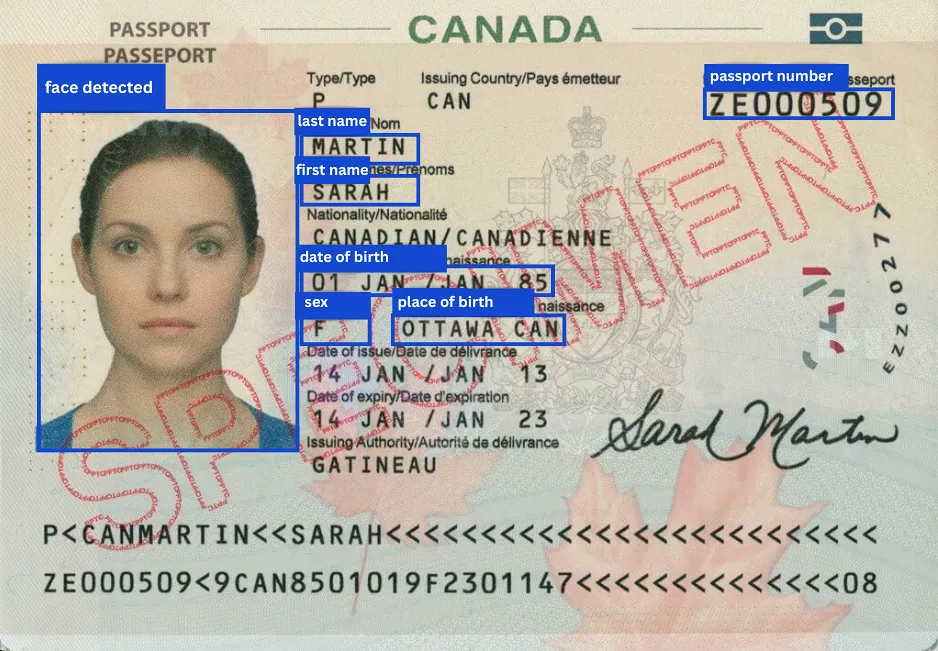
1. Discover PII Across Your Data Sources
Scan file systems, cloud storage, document repositories, databases, and other data sources intended for AI processing. Pay particular attention to unstructured data such as PDFs, emails, scanned documents, and support tickets, where PII can be difficult to identify at scale.
2. Classify Data by Sensitivity
Categorize discovered PII based on its type and sensitivity. A person's name, Social Security number, medical record, and credit card number do not necessarily require identical treatment. Accurate classification helps determine what data can be used for AI, what requires additional protection, and what should be excluded.
3. Redact, Mask, or De-Identify
Once sensitive information has been identified, organizations can determine how it should be treated before it enters an AI pipeline. Depending on the use case, techniques can include:
- Redaction: Removing sensitive information from the data.
- Masking: Replacing sensitive values with obscured or substituted versions.
- Pseudonymization: Replacing identifying information with pseudonyms while keeping additional identifying information separately.
- Anonymization: Transforming data so individuals can no longer be identified, provided the applicable standard for anonymization is met.
4. Minimize the Data Used for AI
AI systems should only receive the data necessary for their intended purpose. Rather than ingesting entire repositories when only a subset of the information is required, exclude unnecessary records, fields, and personal identifiers before training or ingestion.
5. Control Access to RAG Data
For Retrieval-Augmented Generation (RAG), access controls should extend to the data the AI system can retrieve. Permissions and role-based access controls (RBAC) can help prevent users from accessing sensitive documents through an AI interface when they would not otherwise have permission to view the source data.
6. Continuously Monitor AI Data Pipelines
PII discovery should not end after the initial dataset has been reviewed. New files, support tickets, documents, and database records can introduce additional sensitive information over time. Continuous or scheduled scanning helps identify new PII before it reaches training datasets or other AI data pipelines.
Protect Your AI Pipelines with PII Tools
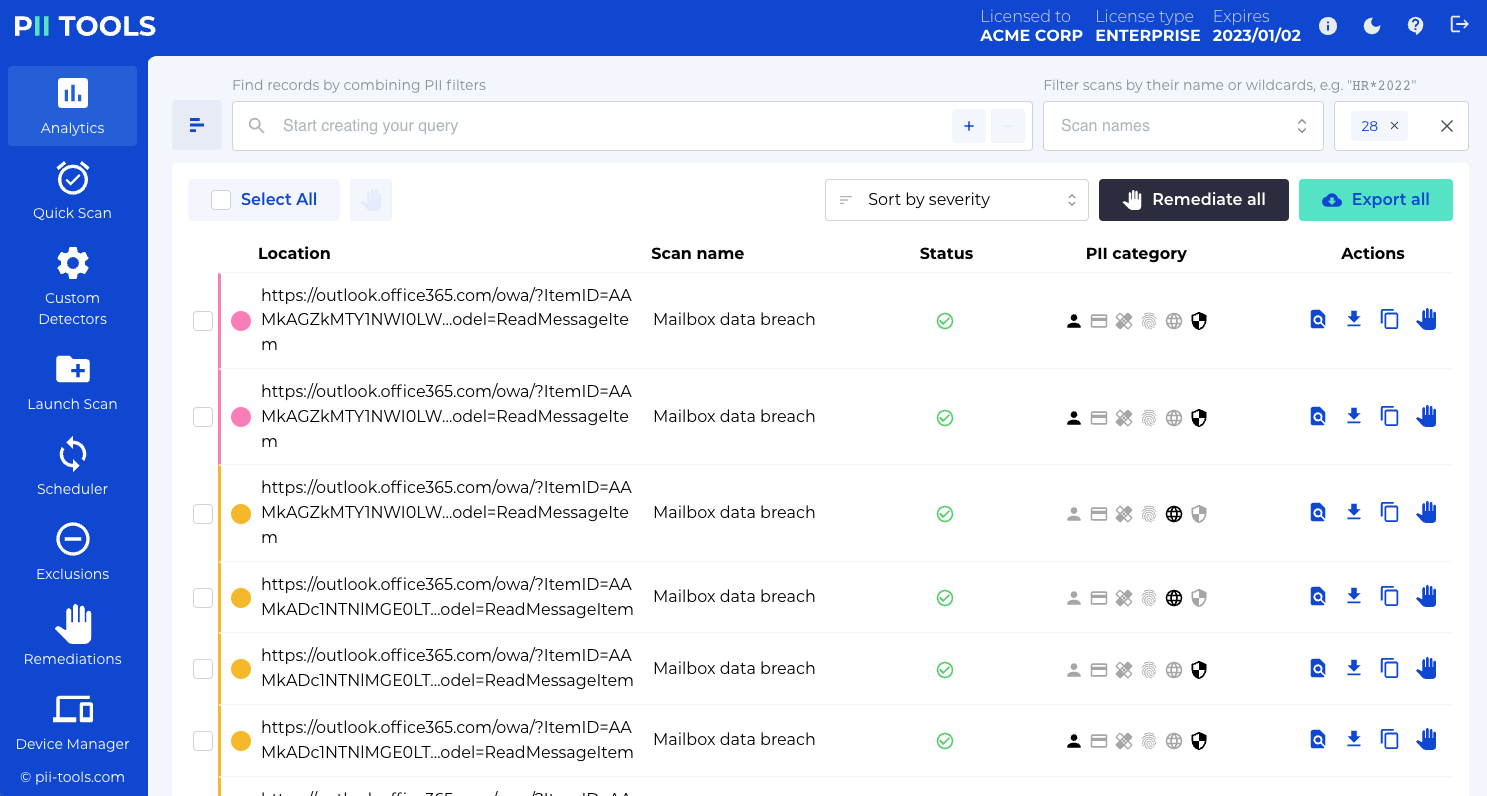
Preparing enterprise data for AI starts with knowing what it contains. PII Tools automatically discovers and classifies PII and other sensitive information across databases, documents, emails, scanned files, and other structured and unstructured data sources.
With PII Tools AI Data Protector, organizations can identify and protect sensitive information before it reaches AI systems, reducing unnecessary PII exposure across model training, RAG indexes, and other generative AI workflows.
Click Below to Protect Sensitive Data Across Your AI Pipelines ⤵️
Frequently Asked Questions (FAQ)
What is PII in AI training data?
PII in AI training data is any personally identifiable information included in datasets used to train or fine-tune an AI model. This can include names, contact details, financial information, health records, online identifiers, and other information that can identify an individual.
Can AI models memorize PII from training data?
Yes, language models can memorize aspects of their training data and, under certain conditions, reproduce that information in their outputs. Minimizing unnecessary PII before training helps reduce this risk.
Can deleting training data remove PII from an AI model?
Not necessarily. Deleting the original source data after training does not automatically remove its influence from an already trained model. This is why identifying and protecting PII before training is particularly important.
How can organizations protect PII before AI training?
Organizations can discover and classify PII, minimize unnecessary data, and use techniques such as redaction, masking, pseudonymization, or anonymization before data enters an AI training pipeline.
Can PII be exposed through RAG systems?
Yes. RAG applications retrieve information from connected data sources at runtime. If those sources contain PII and access controls are insufficient, sensitive information may be returned to users who should not have access to it.
What types of enterprise data should be scanned for PII before AI use?
Organizations should scan both structured and unstructured sources, including databases, documents, emails, scanned files, support tickets, cloud storage, and knowledge repositories intended for AI training or retrieval.
Why is continuous PII discovery important for AI?
Enterprise data changes constantly. New documents, emails, support tickets, and database records can introduce PII after an initial review, so continuous or scheduled scanning helps identify sensitive information as AI datasets and connected sources evolve.
What is PII Tools?
PII Tools is sensitive data discovery software, so you can discover, analyze, and remediate PII across all your digital assets, on-premises or on your Private Cloud. Schedule a FREE DEMO and secure your PII for good!