







Key Takeaways
- U.S. businesses may face international privacy laws depending on where they operate and process data.
- GLBA protects financial information handled by covered U.S. financial institutions.
- LGPD and POPIA regulate personal data in Brazil and South Africa.
- The EU AI Act regulates AI based on risk and can also apply to U.S. companies.
- Data visibility is fundamental to compliance, helping organizations find, classify, and protect sensitive information.
What US Companies Need to Know
For U.S. businesses, data privacy compliance doesn't stop at the border. Processing personal data from individuals in Brazil or South Africa, or deploying AI systems used in Europe, can bring international regulatory requirements into play alongside domestic laws like GLBA.
In this article, we compare GLBA, LGPD, POPIA, and the EU AI Act side by side. Explore their scope, key requirements, and enforcement risks to see how U.S. organizations can maintain compliance across jurisdictions.
1. GLBA: The Gramm-Leach-Bliley Act
The Gramm-Leach-Bliley Act (GLBA) is a U.S. federal law governing how financial institutions collect, share, and protect consumers' nonpublic personal information (NPI).
Its scope extends beyond traditional banks. Depending on their activities, mortgage lenders, finance companies, financial advisors, tax preparation firms, collection agencies, and other organizations providing financial products or services can also be covered.
A key component of GLBA compliance is the Safeguards Rule, which requires covered financial institutions to maintain an information security program designed to protect customer information.
2. LGPD: Lei Geral de Proteção de Dados
Brazil's Lei Geral de Proteção de Dados (LGPD) is a comprehensive privacy law governing the processing of personal data.
Importantly for U.S. businesses, its reach isn't limited to organizations established in Brazil. The LGPD applies whenever data processing takes place in Brazil, when goods or services are offered to individuals located there, or when personal data was originally collected within the country.
The law broadly covers personal data and provides additional protections for sensitive personal data, including information related to health, biometrics, religion, and political opinions.
3. POPIA: Protection of Personal Information Act
South Africa's Protection of Personal Information Act (POPIA) regulates how public and private organizations process personal information.
For U.S. organizations, POPIA can apply when processing personal information in South Africa through local operations or infrastructure. The law establishes eight conditions for lawful processing, covering areas such as accountability, processing limitations, data quality, and security safeguards.
It also sets requirements for how personal information is collected, used, secured, and accessed, with additional protections for "special personal information" such as health, biometric, religious, and criminal-behavior data.
4. The EU AI Act
Unlike the other three regulations, the EU AI Act is not primarily a data privacy law. Instead, it establishes a risk-based regulatory framework for the development and use of artificial intelligence.
The Act prohibits certain AI practices and establishes specific requirements for areas including high-risk AI systems, transparency, and general-purpose AI models.
Importantly for U.S. companies, the AI Act has extraterritorial reach. It can apply when AI systems or general-purpose AI models are placed on the EU market, or when the output of an AI system operated outside the EU is used within the Union.
Key Data Privacy Regulations Side-by-Side
|
Feature |
GLBA (United States) |
LGPD (Brazil) |
POPIA (South Africa) |
EU AI Act (European Union) |
|
Primary scope |
U.S. financial institutions and how they handle consumer financial information. |
Any business processing the personal data of people located in Brazil. |
Organizations processing personal information under South African jurisdiction. |
Anyone placing an AI system on the EU market or using AI outputs in the EU. |
|
Extraterritorial reach |
❌ |
✅ |
✅ |
✅ |
|
Maximum penalties |
Severe federal fines and potential imprisonment. 📉👮 |
2% of the organization's revenue in Brazil for the prior fiscal year, up to 50 million reals. 📉👮 |
Significant fines or imprisonment. 📉👮 |
Up to €35 million or 7% of global annual turnover for the most serious violations. 💰 |
|
Core regulatory approach |
Sector-specific framework using an opt-out model for consumers. |
Comprehensive data protection law inspired heavily by the GDPR. |
Comprehensive privacy law heavily reliant on strict opt-in consent. |
Four-tier, risk-based classification system specifically targeting AI deployment. |
Navigating Global Compliance with Automated Discovery
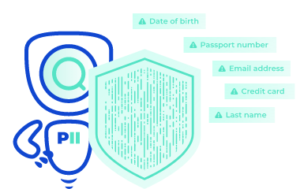
The common challenge across these regulations is data visibility. You cannot protect financial information under GLBA, manage personal data under LGPD or POPIA, or govern sensitive content ingested by AI systems if you don't know where that data actually resides.
Automated data discovery helps organizations identify, classify, and locate sensitive information across structured and unstructured environments. This provides the visibility needed to apply appropriate security controls, remediate exposed data, and support compliance across multiple regulatory frameworks.
Discover and Protect Sensitive Information Across Your Organization by Clicking the Button Below for a FREE PII Tools Demo!
Frequently Asked Questions (FAQ)
What is the main difference between GLBA, LGPD, POPIA, and the EU AI Act?
GLBA focuses on financial information in the U.S., LGPD and POPIA regulate personal data in Brazil and South Africa, while the EU AI Act regulates artificial intelligence based on risk.
Can U.S. companies be subject to LGPD?
Yes. LGPD can apply when data is processed in Brazil, goods or services are offered to individuals there, or personal data was collected in Brazil.
Can POPIA apply to U.S. businesses?
Yes. POPIA can apply when a U.S. organization processes personal information in South Africa through local operations or infrastructure.
Does the EU AI Act apply to U.S. companies?
Yes. U.S. companies can fall within its scope when placing AI systems or models on the EU market or when their AI outputs are used within the EU.
How does data discovery support regulatory compliance?
Data discovery helps organizations locate and classify sensitive information across their environments, providing the visibility needed to apply security controls and support compliance.
What is PII Tools?
PII Tools is sensitive data discovery software, so you can discover, analyze, and remediate PII across all your digital assets, on-premises or on your Private Cloud. Schedule a FREE DEMO and secure your PII for good!