







Key Takeaways
- AI performance depends on the quality, accessibility, and organization of the enterprise data it can access.
- Dark data becomes a greater risk as AI systems make hidden information easy to discover.
- Access controls cannot identify sensitive information hidden inside documents that users and AI systems can access.
- Sensitive data discovery, context-aware classification, and remediation should be part of any enterprise AI readiness strategy.
- The AI Data Protector helps organizations control what sensitive information becomes available to AI before it enters AI-powered workflows.
The AI Readiness Problem
Artificial intelligence is changing how organizations create, search, classify, and process documents. But deploying AI across enterprise content isn't as simple as connecting a large language model to existing repositories. The quality of AI output depends heavily on the quality, accessibility, and organization of the underlying data.
That is one of the conclusions of Gartner’s Evaluating AI for Document Management report. Gartner identifies 13 areas where AI can improve document management, from data extraction and semantic search to agentic automation.
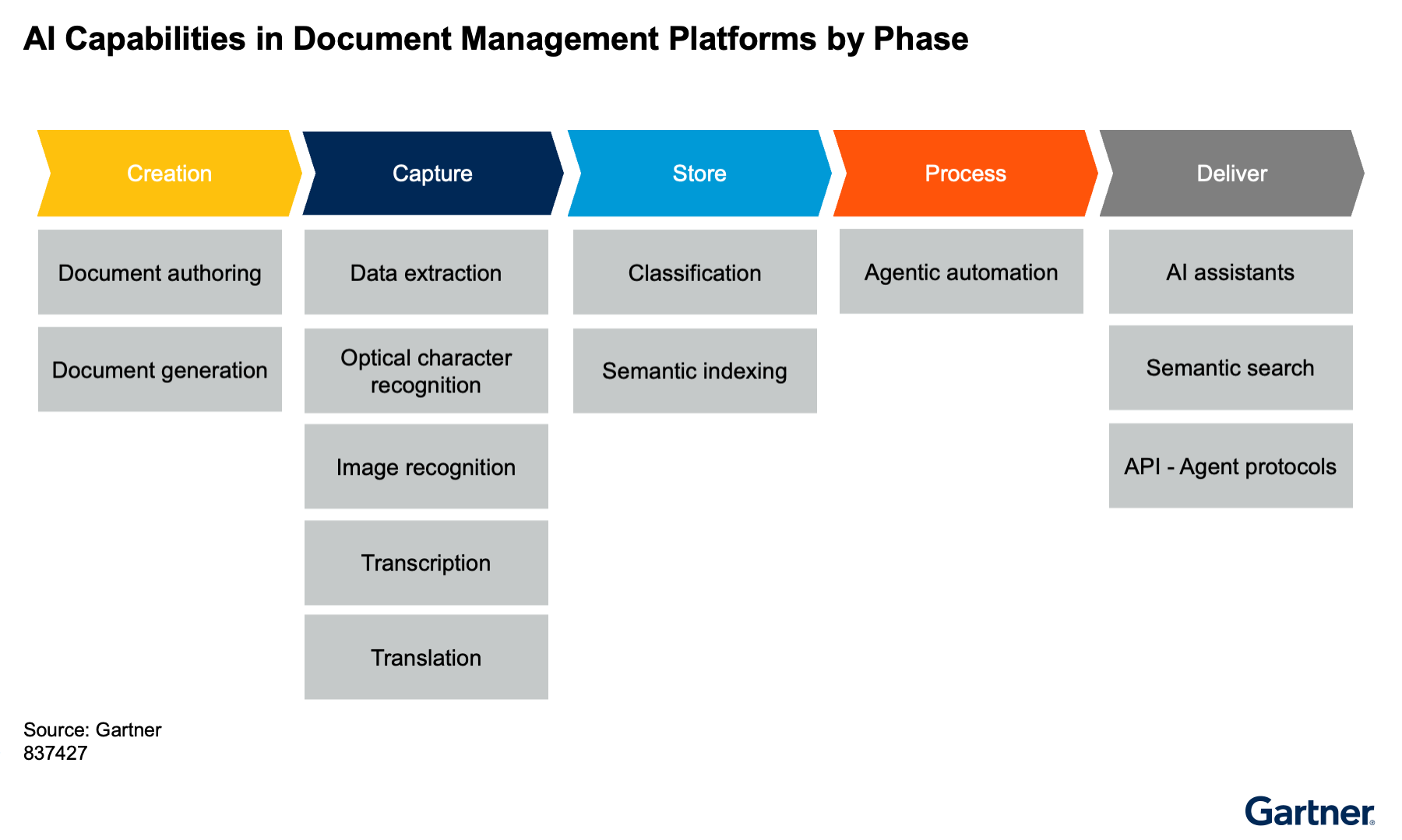
The report also includes a statistic indicating a broader AI readiness problem: Only 14% of organizations report high confidence that their content is AI-ready.
The challenge isn't simply making enterprise content more accessible to AI. Organizations also need to understand what they're making accessible in the first place.
What Gartner Gets Right: AI Depends on Data
According to Gartner, between 70% and 90% of enterprise information exists in unstructured formats. Much of that content remains unclassified, unindexed, and unmanaged, making valuable information difficult for employees to find and limiting the effectiveness of the data available to AI. Gartner puts it:
"AI value is directly proportional to the quality and accessibility of the underlying data [it's] reasoning over."
This matters as organizations move beyond basic generative AI toward enterprise search, AI assistants, Retrieval-Augmented Generation (RAG), and AI agents. Because these tools pull directly from your internal repositories, they are only as reliable and as secure as the data you feed them.
Dark Data Becomes an AI Risk
Enterprise AI changes the risk profile of dark data. Information that was previously difficult to find can now surface through enterprise search, Microsoft Copilot, RAG systems, and AI agents.
That's exactly what these technologies are designed to do: make information spread across large enterprise repositories easier to discover and use. But those repositories may also contain forgotten HR records, customer information, financial data, scanned IDs, credentials, and other sensitive information.

Access controls remain an important line of defense. But permissions alone can't tell you what sensitive information exists inside the documents that users and AI systems are authorized to access.
Before expanding AI access across enterprise data, organizations need to know what sensitive information that data contains.
AI Readiness Requires Data Discovery
Traditional document management focuses heavily on making information organized, accessible, and searchable. But AI readiness also requires understanding the sensitivity and risk associated with that information.
Before connecting large repositories to AI workflows, organizations need the ability to:
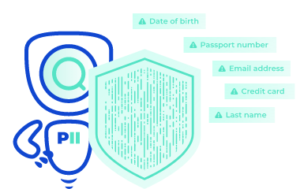
- Discover Sensitive Data: Identify where PII and other sensitive information exists across structured and unstructured repositories.
- See Inside Dark Formats: Detect sensitive information buried inside scanned PDFs, faxes, images, and other content that conventional text-based scanning can miss.
- Classify Data in Context: Differentiate genuinely sensitive information from false positives, rather than relying solely on basic pattern matching.
- Remediate Unnecessary Exposure: Redact, anonymize, delete, quarantine, or otherwise protect sensitive information before making it available to AI.
This is where an AI Data Protector comes in, helping organizations control what sensitive information becomes available to AI in the first place.
PII Tools & AI Readiness
PII Tools adds that sensitive data protection layer to the AI readiness framework highlighted by Gartner. Acting as an AI Data Protector, it helps organizations discover, classify, and protect sensitive information before exposing enterprise repositories to AI-powered workflows.
- Broad Coverage: Scan over 400 file types across cloud, Private Cloud, on-premises, hybrid, and fully air-gapped environments.
- Native OCR: Uncover sensitive PII hidden inside scanned documents, images, and other unstructured content.
- Context-Aware Classification: Identify genuinely sensitive information with greater accuracy than pattern matching alone.
- Automated Remediation: Redact, anonymize, delete, quarantine, or otherwise protect sensitive data based on organizational policies.
- Zero Data Egress: Analyze sensitive data without sending files outside your controlled environment.

For organizations preparing enterprise data for AI, this provides the visibility and control needed to determine what information should be available to AI systems and what should remain restricted.
Beyond Document Management
Better classification, extraction, semantic search, and document management can make enterprise knowledge much more useful to AI systems. But accessibility alone isn't enough.
As organizations give AI assistants and agents access to larger portions of their enterprise data, sensitive data discovery becomes an essential part of AI readiness. Before asking whether your documents are ready for AI, you must ask another question: Is your sensitive data ready for AI?
See how PII Tools can help prepare your sensitive data for AI. Click the Button Below and Get a FREE PII Tools Demo.
Frequently Asked Questions (FAQ)
What is AI-ready data?
AI-ready data is information that is accessible, organized, and suitable for use by AI systems. For sensitive enterprise data, readiness also means understanding what information exists and whether it should be available to AI.
Why is dark data a risk for enterprise AI?
AI assistants, RAG systems, and agents can make previously difficult-to-find information much easier to discover. If dark data contains PII or other sensitive information, AI can increase its exposure.
Are access controls enough to protect sensitive data from AI?
No. Access controls determine who or what can access a file, but they do not identify sensitive information inside documents that authorized users and AI systems can access.
What should organizations do before connecting data to AI?
Organizations should discover and classify sensitive data, assess its exposure, and remediate information that should not be available to AI workflows.
What is an AI Data Protector?
An AI Data Protector provides a security layer between enterprise data and AI, helping organizations discover, classify, and protect sensitive information before it becomes available to AI systems.
How does PII Tools help prepare data for AI?
PII Tools discovers and classifies sensitive information across structured and unstructured data, including scanned documents and images, and enables remediation such as redaction, anonymization, deletion, and quarantine.
What is PII Tools?
PII Tools is sensitive data discovery software, so you can discover, analyze, and remediate PII across all your digital assets, on-premises or on your Private Cloud. Schedule a FREE DEMO and secure your PII for good!