







Key takeaways
- PII redaction only works on data that has been identified. Sensitive information can remain hidden in scans, images, handwritten content, metadata, and other unstructured data.
- LLMs introduce new paths for PII exposure. Prompts, document uploads, RAG systems, and training or fine-tuning datasets can all bring sensitive enterprise data into AI workflows.
- PII protection should happen before data reaches AI. Discover, classify, assess, and minimize sensitive data first, then redact or restrict access where necessary.
- Enterprise-wide PII discovery provides the foundation. Knowing where sensitive data exists helps organizations decide what can safely be used by AI and what should be redacted, restricted, or excluded.

AI PII Redaction
AI-powered PII redaction can identify and remove sensitive information before documents are shared. But you cannot redact sensitive data you don’t know is there. PII frequently hides in scanned PDFs, images, tables, handwritten notes, and other unstructured data that standard discovery methods can miss.
LLMs, RAG, and other AI workflows multiply this risk by accessing and processing vast amounts of enterprise data. Redacting individual documents is a start, but preventing PII leakage also requires knowing exactly where your sensitive data lives, who can access it, and what information is made available to AI.
The Blind Spots of AI PII Redaction
Enterprise document repositories are notoriously messy. A single archive might contain Word files, native PDFs, scanned paperwork, images, tables, completed forms, and handwritten notes. Redaction tools can identify and remove PII from these documents, but only when they can actually detect it.

Before exposing documents to an AI workflow, you have to account for where sensitive information can hide:
- Invisible metadata and layers: PDFs and Office documents contain information beyond what is immediately visible, including document properties, comments, annotations, and underlying text layers. Simply covering sensitive text with a black box, for example, does not remove the underlying data.
- Unstructured and handwritten data: PII is rarely limited to clean, searchable text. A document that appears safe might still contain a customer ID inside an image, a handwritten phone number in the margin, or sensitive information on a hand-filled form.
- Contextual re-identification: Removing obvious identifiers does not necessarily make information anonymous. A combination of attributes, such as a specific job title, location, age, or unusual event, may still make it possible to identify an individual when combined with other available data.
Furthermore, redacting one document does not remove the original or other copies from file shares, cloud storage, databases, backups, or archives. If those repositories later become available to an AI application, the unredacted PII can still enter the workflow.
How PII Leaks into AI Pipelines
Sensitive data can reach an LLM through prompts, uploaded documents, connected knowledge bases, and training or fine-tuning datasets. The Open Web Application Security Project identifies Sensitive Information Disclosure as a major risk in LLM applications, including the exposure of PII and other confidential data through model outputs.
Everyday AI use is one obvious route: employees paste text or upload documents for summarization and analysis, potentially sending PII outside the organization's controlled environment. RAG creates another by connecting LLMs to internal documents and knowledge bases. Without appropriate access controls, an AI application may surface information the user should not be able to access.

Training and fine-tuning datasets may also contain PII that was never identified or removed, while research has shown that models can, under certain conditions, reproduce memorized training data. Prompt injection adds another risk by attempting to make an AI application reveal information available in its context or connected systems. The more sensitive data an AI system can access, the more important it is to control what enters the AI pipeline in the first place.
Shift PII Protection Upstream
Preventing PII leakage means addressing sensitive data before it reaches an LLM. Instead of asking only “How do we redact this document?”, organizations need to know what sensitive data they have, where it is, and whether an AI system needs access to it at all.
A practical workflow looks like this:
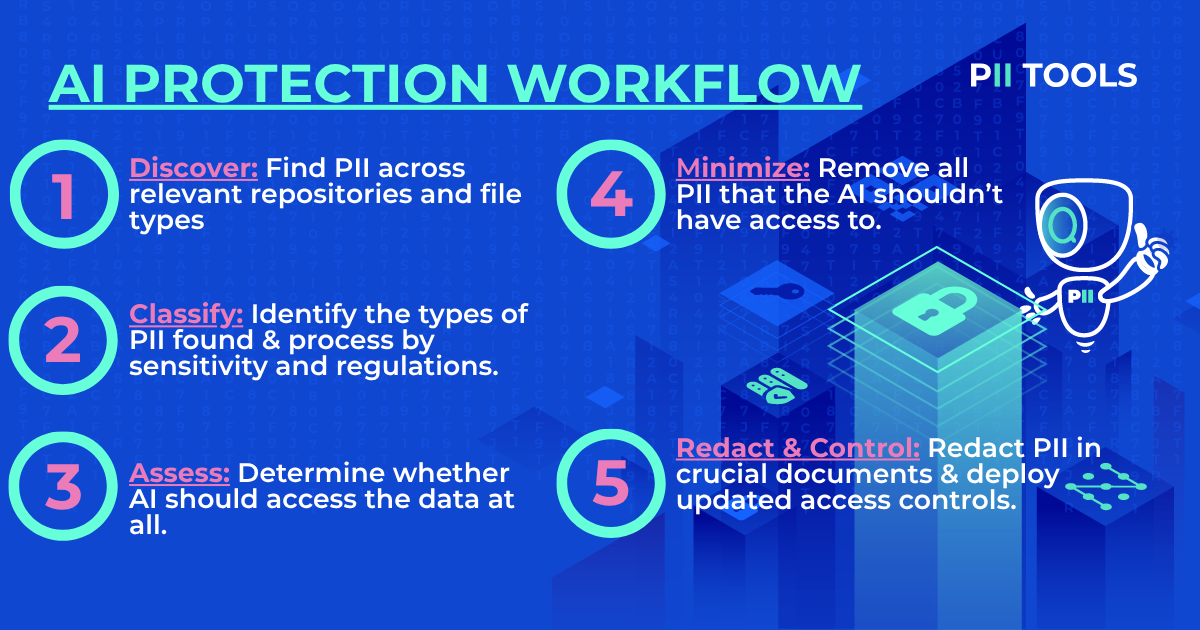
At enterprise scale, this depends on being able to discover PII consistently across large, mixed-format data environments. That discovery layer can then inform what gets redacted, restricted, or kept out of AI workflows altogether.
Protect PII Across All AI Pipelines with PII Tools
PII Tools discovers and classifies sensitive information across structured and unstructured enterprise data, supporting 400+ file formats. That includes PDFs, Office documents, images, scanned paperwork, forms, and handwritten content that conventional text search or OCR may miss. Because everything runs 100% on-premises, you can analyze sensitive data without ever sending it to external AI services.
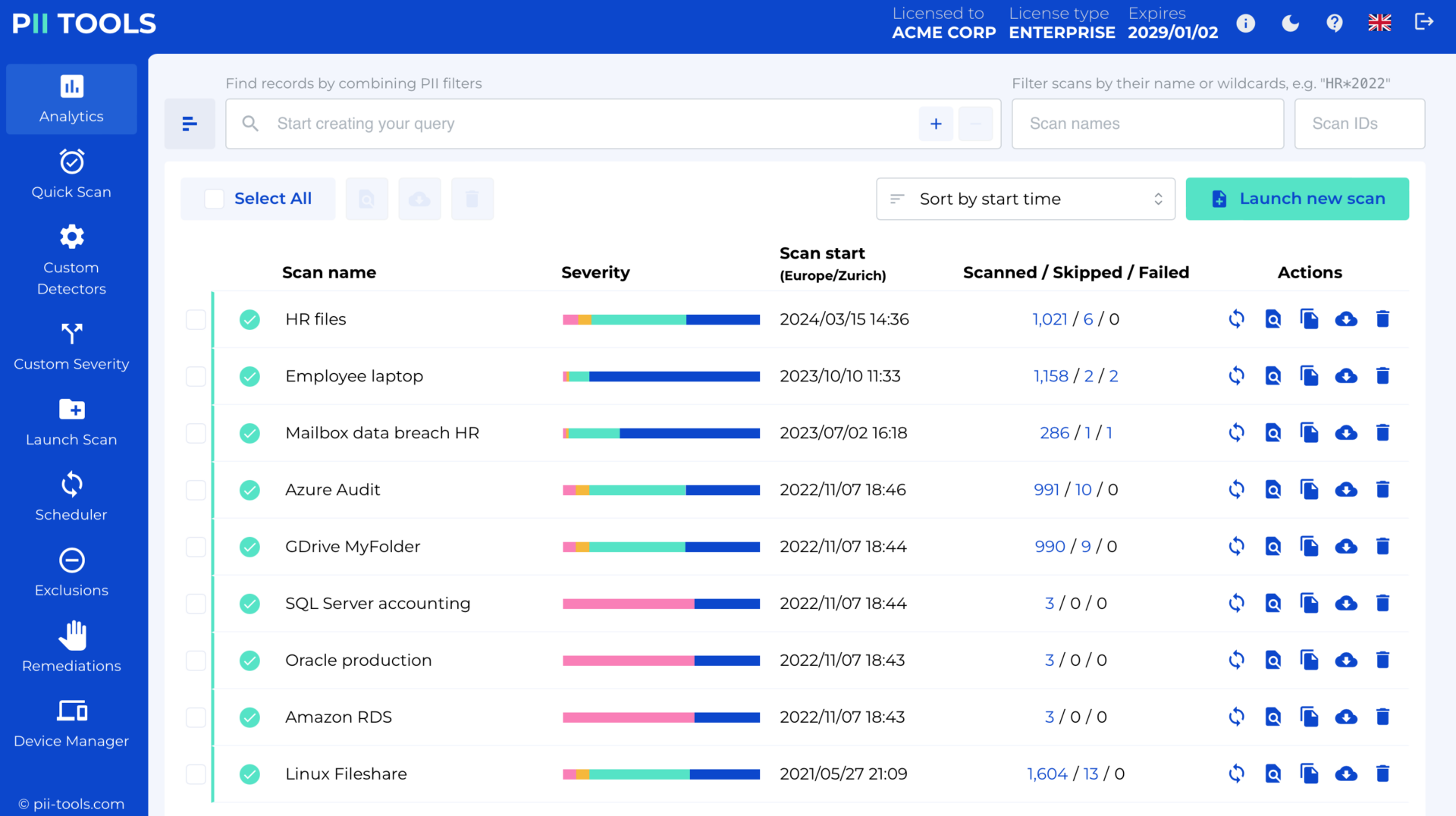
Once you know where PII exists, you can decide what should be redacted, restricted, or excluded from AI workflows altogether. PII Tools combines discovery, classification, and document redaction to help organizations make those decisions before sensitive information reaches an LLM, RAG system, or training dataset.
Discover and Protect PII Before It Reaches Your AI Pipelines ⤵️
Frequently Asked Questions (FAQ)
What is AI PII redaction?
AI PII redaction uses automated detection to identify personally identifiable information in documents and remove, mask, or obscure it. It can help reduce manual review, particularly when processing large volumes of documents.
Can AI automatically redact PII from PDFs?
Yes. AI-powered tools can detect and redact PII from PDFs, but results depend on what content they can analyze. Scanned pages, images, handwriting, annotations, and underlying text layers may require additional detection and recognition capabilities.
Why isn’t PII redaction enough to prevent data leakage?
Redaction only protects PII that has been identified and removed from a specific document or dataset. Unredacted copies may remain elsewhere, while sensitive information can also enter AI systems through prompts, RAG knowledge bases, training data, and other connected sources.
How can PII leak into an LLM?
PII can reach LLMs through user prompts, uploaded documents, training and fine-tuning datasets, and connected enterprise data sources such as RAG knowledge bases. Inadequate access controls can also allow AI applications to retrieve sensitive information that a user should not be able to access.
How can organizations prevent PII from being exposed to AI?
Start by discovering and classifying PII across the data sources available to AI. Assess whether the information is necessary, minimize unnecessary personal data, redact sensitive fields where appropriate, and restrict access to the remaining data based on user permissions.
What is PII Tools?
PII Tools is sensitive data discovery software, so you can discover, analyze, and remediate PII across all your digital assets, on-premises or on your Private Cloud. Schedule a FREE DEMO and secure your PII for good!