







For years, HIPAA compliance has largely centered around policies, procedures, and periodic risk assessments. But as ransomware attacks, data breaches, and third-party security incidents continue to rise across the healthcare sector, regulators are pushing for stronger and more prescriptive cybersecurity requirements.
The upcoming HIPAA Security Rule update represents one of the most significant changes to healthcare data protection in years.

While implementation timelines and final details continue to evolve, the direction is clear: Healthcare organizations will be expected to maintain greater visibility into electronic Protected Health Information (ePHI), strengthen security controls, and demonstrate a more proactive approach to risk management.
For healthcare providers, insurers, business associates, and healthcare technology companies, this means HIPAA compliance can no longer be treated as an annual exercise. Organizations must be able to continuously understand where sensitive patient data resides, how it’s protected, and what risks it faces.
TOP #4 HIPAA Changes
The proposed HIPAA Security Rule update places significantly greater emphasis on technical safeguards, risk management, and continuous visibility into ePHI. While organizations should continue monitoring official guidance as the rule evolves, several major themes have emerged.
1) Stronger Encryption Requirements
The proposed update places greater emphasis on encrypting ePHI wherever it resides, including local workstations, legacy servers, databases, backups, and shared drives.
2) Technology Asset Inventory & Network Mapping
Healthcare organizations are expected to maintain a more comprehensive and accurate inventory of systems, repositories, and data flows that contain or process ePHI. Static asset inventories and periodic documentation reviews may no longer be sufficient to demonstrate ongoing compliance.
3) More Frequent Security Risk Analysis (SRA)
Organizations should prepare for more frequent and more rigorously documented Security Risk Analysis activities. The focus is shifting from periodic compliance reviews toward continuous identification, assessment, and security risk mitigation.
4) Expanded Technical Safeguards
Multi-factor authentication (MFA), vulnerability management, and regular security testing are expected to become increasingly important components of HIPAA security programs. As cyber threats continue to evolve, organizations will be expected to demonstrate stronger protection for systems that access or store ePHI.
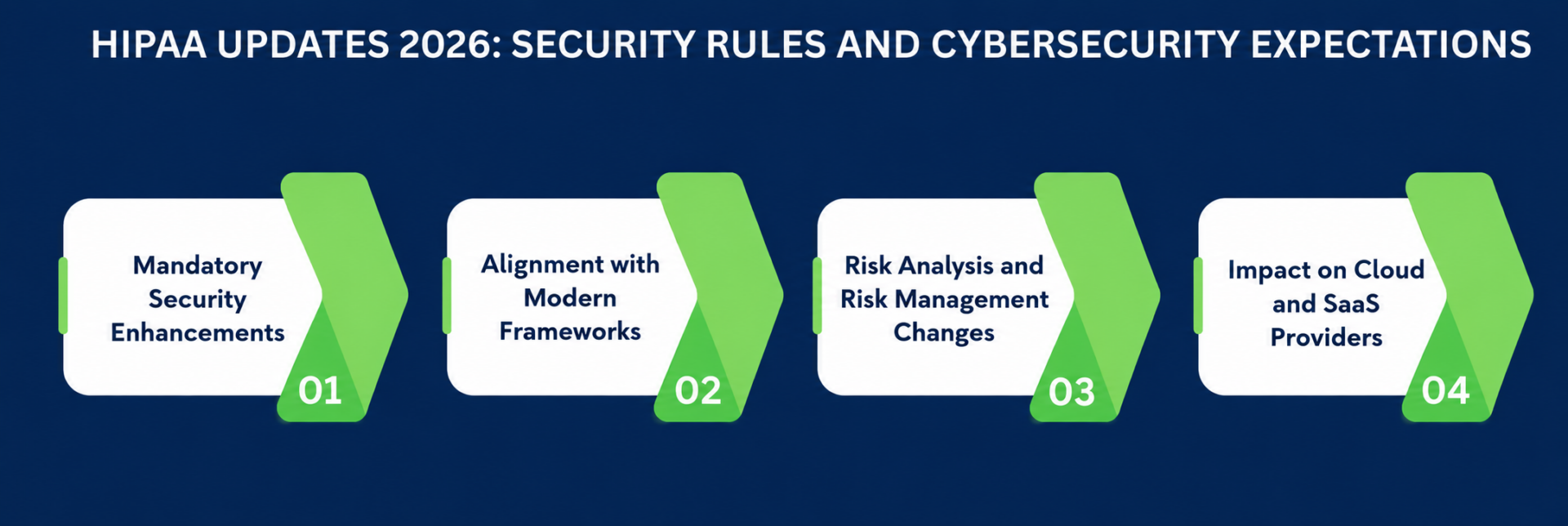
Collectively, these changes signal a broader shift in HIPAA compliance. Rather than focusing primarily on policies and periodic audits, healthcare organizations are increasingly expected to maintain continuous awareness of where sensitive data exists, how it’s protected, and what risks it faces.
This creates a fundamental challenge: Organizations cannot secure, encrypt, classify, or govern ePHI they cannot find. Without accurate data discovery and mapping, demonstrating compliance becomes significantly more difficult.
The Hidden Compliance Risk
The hardest part of complying with stronger encryption, asset inventory, and risk management requirements is not securing your primary Electronic Health Record (EHR) system – it’s finding the ePHI that has spread beyond it.
Over time, healthcare organizations naturally accumulate large volumes of “dark data”, i.e., patient records, administrative documents, and other sensitive information scattered across file shares, archives, legacy systems, and other unstructured repositories.
PHI often ends up in locations that receive far less oversight, including:
- Shared network drives and departmental file shares
- Scanned patient intake forms and faxes
- Image-based PDFs and medical documentation
- Insurance claims, billing documents, and exported spreadsheets
- Local employee desktops and archived email attachments
This is where compliance becomes difficult. You cannot protect, encrypt, or govern data you don’t know you have.
The question healthcare organizations increasingly need to answer is not “Where was our PHI during the last audit?” but “Where is our PHI right now?”
HIPAA Compliance with PII Tools
Healthcare organizations need a way to identify, classify, and govern sensitive information across increasingly complex environments. PII Tools helps uncover hidden ePHI, reduce blind spots, and maintain visibility into where patient data resides.
1. Zero-Data-Egress Architecture
Unlike other discovery tools that require files to be sent outside your data environment, PII Tools offers fully air-gapped on-premises and self-hosted secure cloud options. That means patient data never leaves your infrastructure, ensuring complete control over sensitive information.
2. Automated ePHI Discovery and Data Mapping
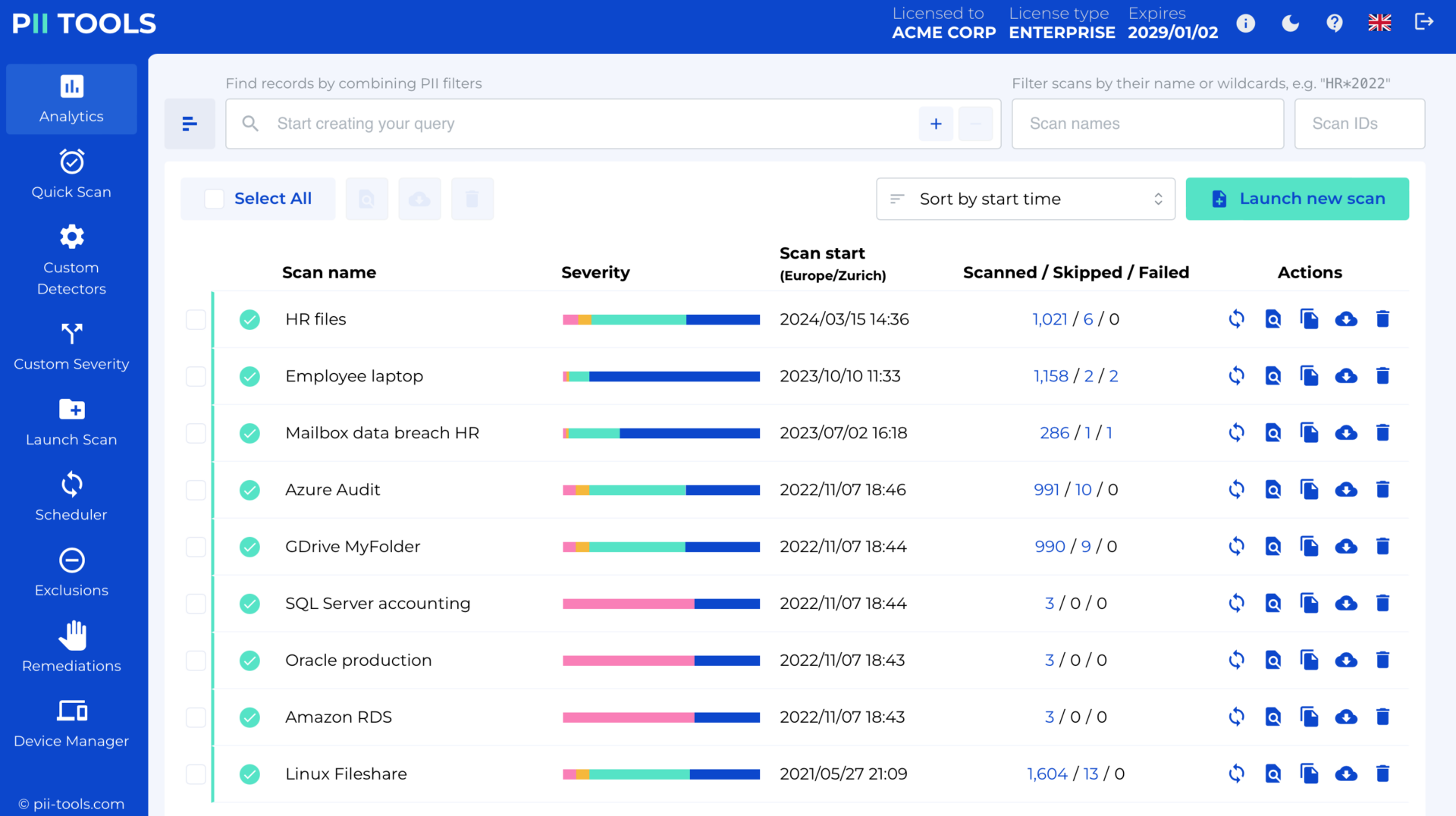
PII Tools continuously scans your environment to identify, index, and categorize structured and unstructured patient data. This helps teams understand where ePHI resides, uncover hidden repositories, and build a more accurate picture of their data footprint.
3. Advanced OCR for Legacy and Image-Based Records
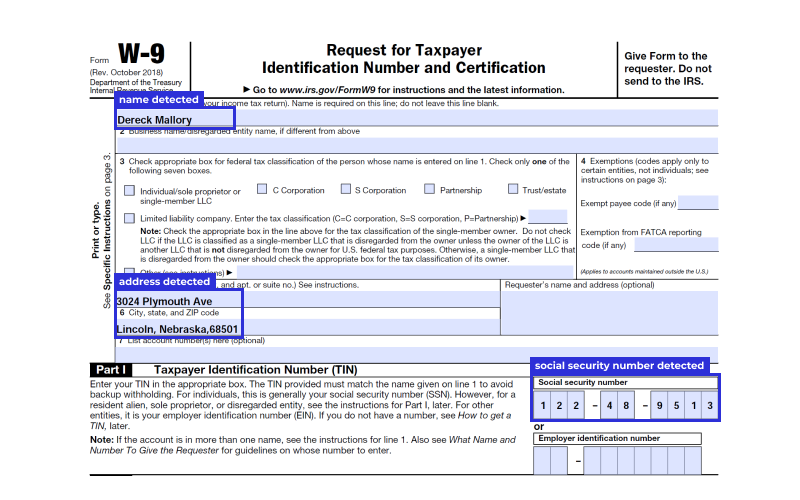
Scanned forms, PDFs, faxes, and image-based medical documentation often fall outside the reach of traditional discovery tools. PII Tools combines OCR with AI-powered classification to identify sensitive information across more than 400 file formats, ensuring these records are no longer invisible.
4. Strengthening Microsoft Purview and DLP Programs
For organizations using Microsoft Purview or other DLP platforms, PII Tools acts as a high-accuracy discovery layer. By accurately identifying ePHI, it helps improve sensitivity labeling, strengthen downstream policies, and reduce false positives.
Turn Regulatory Risk into Proactive Governance
The proposed HIPAA Security Rule update reinforces a simple reality: You cannot protect data you don’t know you have. As regulatory expectations continue to evolve, visibility into sensitive information is becoming the foundation of effective security and compliance programs.
Click Below to Discover How PII Tools Automates ePHI Mapping & Ensures Compliance with the Updated HIPAA Security Rule ⤵️
Frequently Asked Questions (FAQ)
- What is changing in the 2026 HIPAA Security Rule update?
The proposed 2026 HIPAA Security Rule update places greater emphasis on continuous risk management, stronger technical safeguards, and ongoing visibility into where electronic Protected Health Information (ePHI) is stored and processed.
- What is continuous ePHI discovery?
Continuous ePHI discovery is the automated process of continuously scanning an organization's environment to locate, classify, and monitor electronic Protected Health Information (ePHI) across file shares, cloud storage, endpoints, email, databases, and other repositories.
- Why is continuous ePHI discovery important for HIPAA compliance?
You cannot effectively secure or govern data you cannot find. Continuous ePHI discovery helps healthcare organizations identify hidden sensitive data, reduce compliance gaps, improve Security Risk Analyses (SRAs), and support HIPAA Security Rule requirements.
- Where is hidden ePHI commonly found?
Hidden ePHI is often stored in unstructured data sources such as PDFs, scanned documents, spreadsheets, archived files, shared network drives, cloud storage, email attachments, and departmental file shares that may not be actively monitored.
- How does automated ePHI discovery improve healthcare cybersecurity?
Automated discovery tools continuously identify and classify sensitive healthcare data, helping security teams prioritize remediation, reduce data exposure, strengthen Data Loss Prevention (DLP) policies, and improve incident response.
- Does Microsoft Purview automatically find all ePHI?
Microsoft Purview provides powerful data governance and compliance capabilities, but its effectiveness depends on accurately discovering and classifying sensitive data. Many organizations supplement Purview with dedicated data discovery solutions that identify hidden or unstructured ePHI before governance policies are applied.
- How can healthcare organizations prepare for the 2026 HIPAA update?
Organizations should begin by continuously discovering where ePHI exists, maintaining accurate asset inventories, strengthening encryption and multi-factor authentication (MFA), conducting regular Security Risk Analyses (SRAs), and implementing ongoing vulnerability and data governance programs.
- What is PII Tools?
PII Tools is sensitive data discovery software, so you can discover, analyze, and remediate PII across all your digital assets, on premises or on your Private Cloud. Schedule a FREE DEMO and secure your PII for good!