







Key Takeaways HIPAA defines 18 identifiers that can identify an individual when associated with health or healthcare payment information, making that information Protected Health Information (PHI). All 18 identifiers must be removed under HIPAA Safe Harbor for healthcare data to qualify as de-identified under that method. The identifiers cover a broad range of data, including names, addresses, dates, phone numbers, … Read More
HIPAA Compliance Checklist 2026: What US Healthcare Companies Need to Know
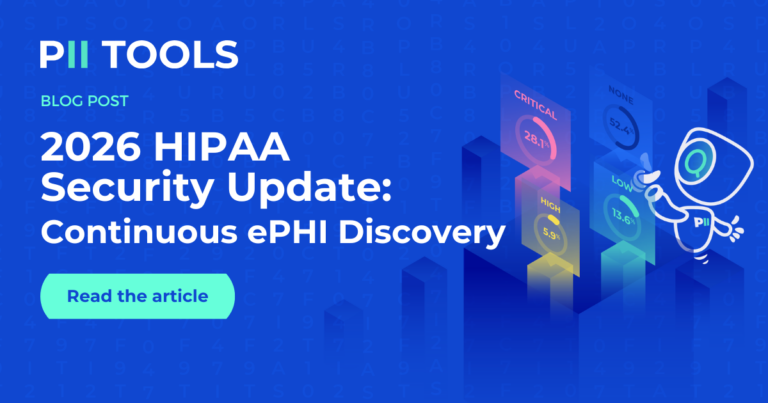
Key Takeaways HIPAA compliance begins with knowing where ePHI exists across structured and unstructured data. Continuous data discovery and context-aware classification help maintain an accurate inventory of sensitive healthcare information. Native OCR is essential for identifying ePHI hidden in scanned documents, medical forms, faxes, and image files. Automated remediation, including redaction, encryption, and quarantine, helps reduce the risk of unauthorized … Read More
2026 HIPAA Security Update: Continuous ePHI Discovery
Key Takeaways The 2026 HIPAA Security Rule update emphasizes continuous ePHI discovery, requiring healthcare organizations to maintain ongoing visibility into where sensitive data resides – not just during annual risk assessments. Continuous data discovery helps reduce compliance risk by identifying hidden ePHI across file shares, cloud storage, email, endpoints, and other unstructured data sources. Organizations that continuously discover, classify, and … Read More
HIPAA Compliance Explained: Full Guide + PII Examples
Key Takeaways HIPAA compliance is an ongoing process, requiring healthcare organizations to protect Protected Health Information (PHI) through administrative, physical, and technical safeguards. Understanding where PHI is stored is essential for compliance. Accurate data discovery and classification help organizations reduce risk, strengthen security, and support HIPAA Security Rule requirements. A proactive approach to HIPAA compliance – including continuous monitoring, employee … Read More
HIPAA Compliance 2026: PHI Discovery & OCR Tools
For years, HIPAA compliance was straightforward: protect the Electronic Health Record (EHR) system, and you protect the organization. In 2026 and beyond, that approach no longer works. The real risk has shifted to the messy, unstructured “Dark Data” surrounding the EHR. Protected Health Information (PHI) now leaks into email attachments, billing exports, shared drives, and increasingly, AI workflows. In the … Read More
PII and Its Many Forms
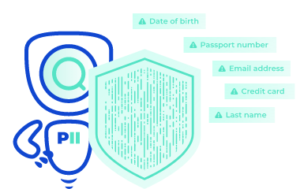
Sensitive data and personal information come in many shapes and sizes. And with so many different regulations around the globe, it’s easy to confuse one with another. These are the basics of PII and every form you’ll find it in. Let’s get into it. Understanding PII The world of sensitive data protection has its own terminology you’ll need to be … Read More
What Are Sensitive Data Discovery Tools and How Do They Work?
With technology progressing and changing every day, it can sometimes be difficult to keep up with the times. As a business, however, falling behind can mean letting important (and legally binding) information fall through the cracks, disappointing customers and losing the trust of business partners. This is where sensitive data discovery tools come into play. But what exactly are they … Read More
Detect Person Names in Text: Part 2 (Technical)
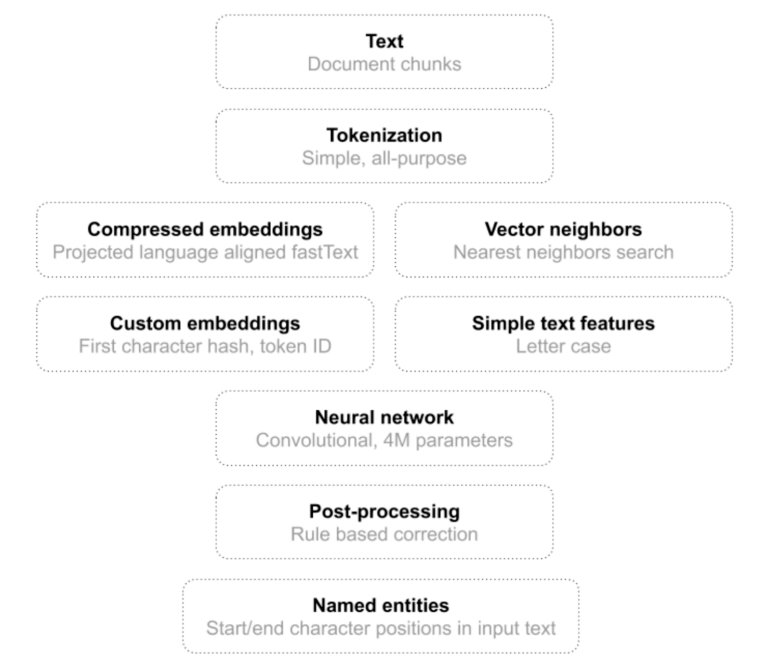
In Detect Person Names in Text: Part 1 (Results), we benchmarked our new named entity recognizer (NER) against popular open source alternatives, such as Stanford NER, Stanza and SpaCy. Today we dig a little deeper into the NER architecture and technical details. Key Takeaways Detecting person names in text at scale relies on advanced Named Entity Recognition (NER) models, often … Read More