







Key Takeaways
- CMMC, DFARS, and related federal frameworks require organizations to maintain visibility into where sensitive data resides across their environment.
- Dark data stored in file shares, legacy archives, local devices, and scanned documents creates significant compliance and audit risks.
- Cloud-based PII scanners that require files to leave the environment may not meet the operational or security requirements of many government contractors.
- On-premises and air-gapped PII discovery enables organizations to identify and classify sensitive data with zero data egress.
- Native OCR helps uncover CUI, PII, and other sensitive information hidden inside scanned documents, engineering files, and legacy records.
For US government contractors, data security is no longer just an operational preference.
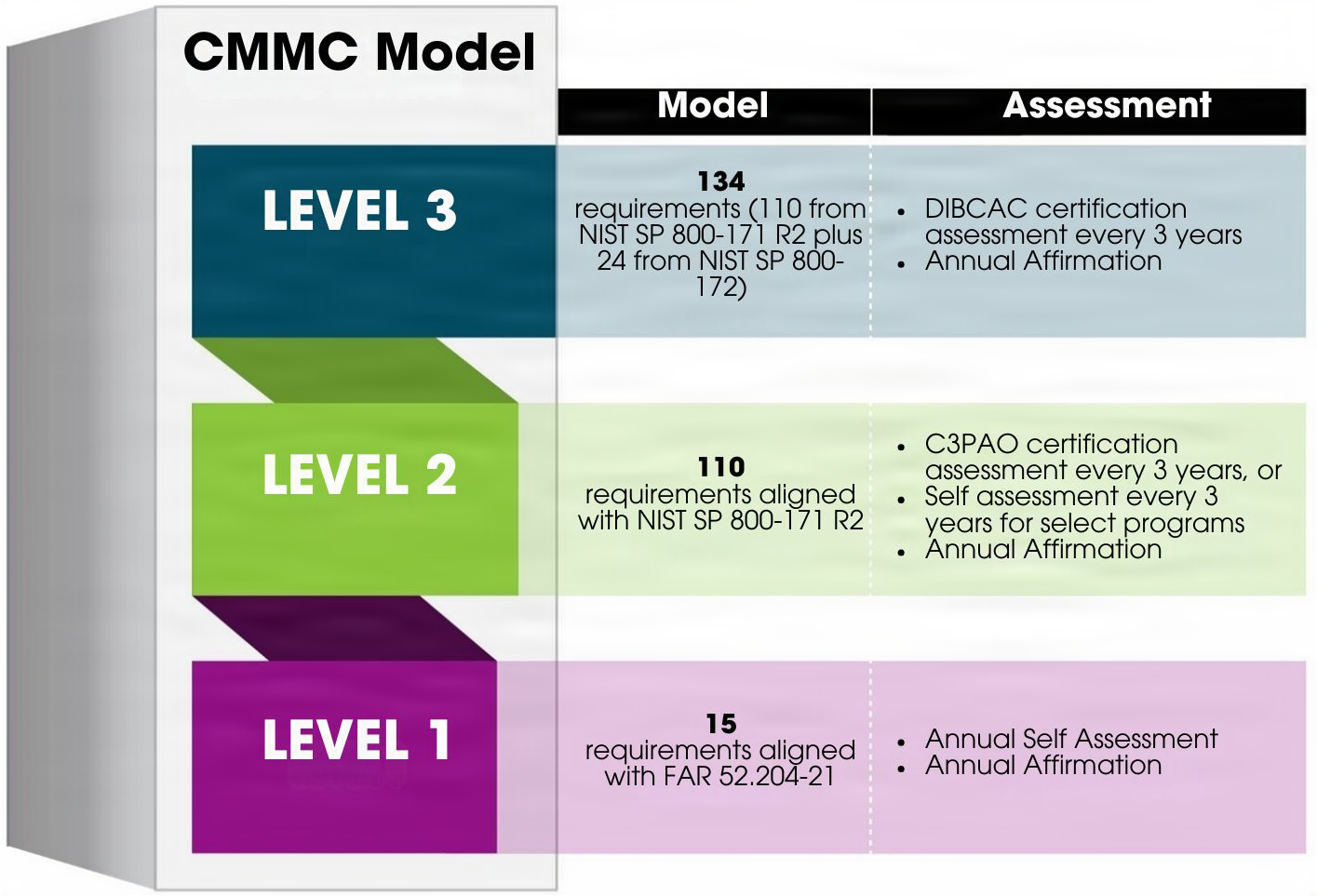
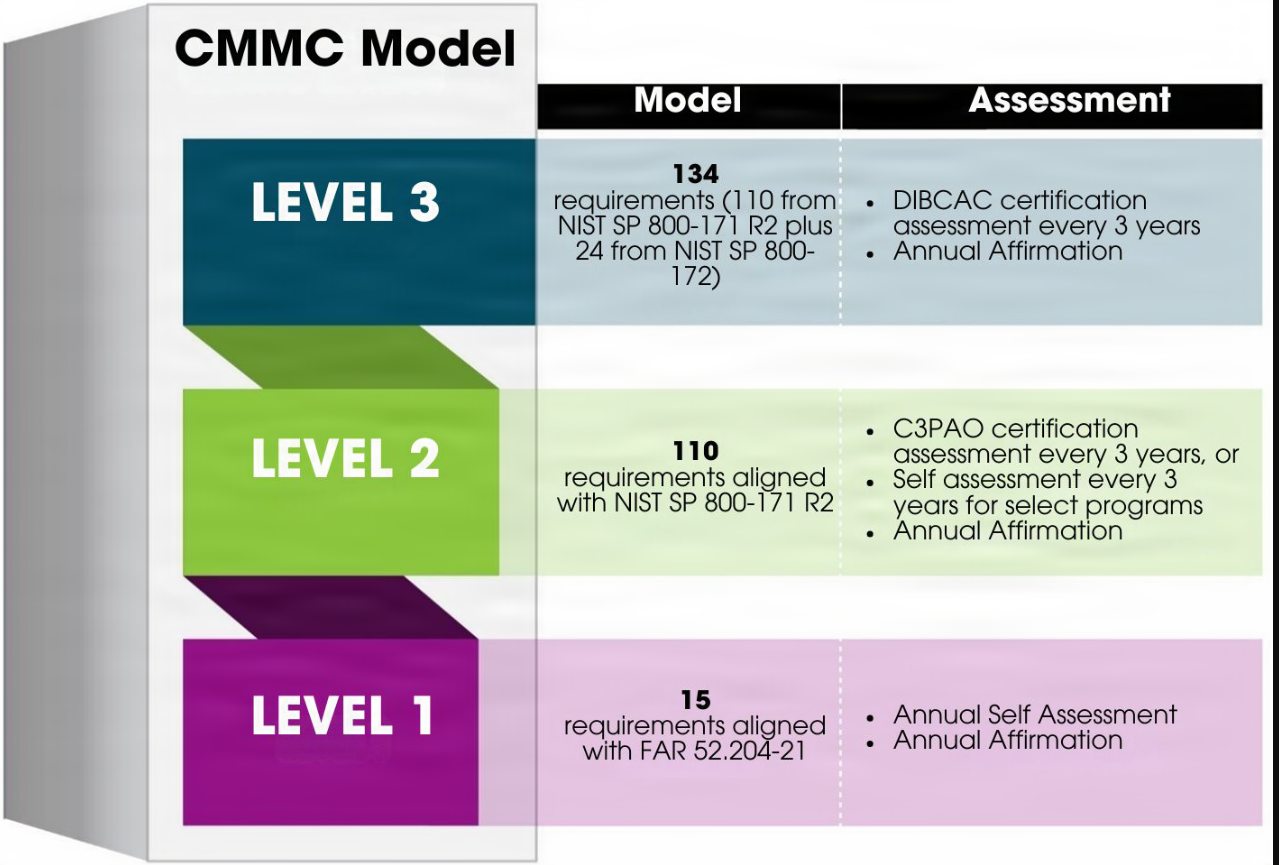
Under frameworks like the Cybersecurity Maturity Model Certification (CMMC), DFARS, and FISMA, protecting sensitive information has become a direct requirement for participating in the federal supply chain.
Source: DoD CIO
As the Department of Defense (DoD) continues rolling out mandatory CMMC requirements, the expectations around handling Controlled Unclassified Information (CUI) and Federal Contract Information (FCI) are becoming significantly stricter.
The primary compliance challenge for many federal contractors is no longer perimeter defense alone, but a fundamental lack of internal visibility. If an organization cannot confidently locate, classify, and secure sensitive data across its environment, it increases the risk of audit findings, compliance gaps, and procurement complications during contract reviews.
Storing “Dark Data”?
Sensitive information rarely stays inside neatly managed, highly secure systems. Personally Identifiable Information (PII), controlled project documentation, ITAR-regulated engineering files, employee records, and procurement paperwork gradually spread across the organization.
Over time, files accumulate on shared drives, local devices, legacy archives, backup repositories, and spreadsheets. This creates large volumes of “dark data”—unmanaged, unindexed information that exists somewhere in the environment but is no longer actively tracked or governed.
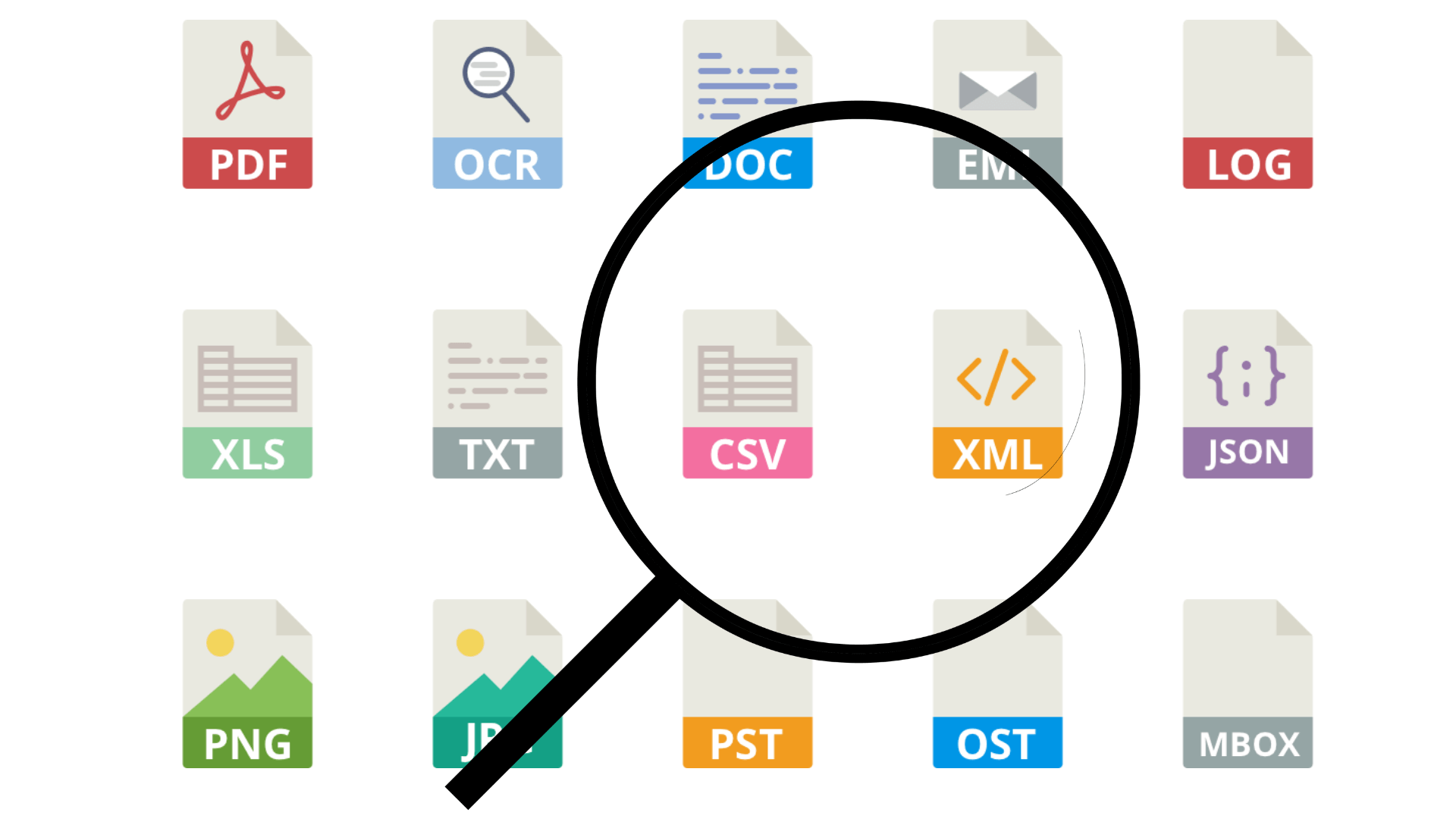
For government contractors, this creates a serious compliance challenge. You cannot properly secure, classify, retain, or report on sensitive data if you do not know where it resides.
Cloud-Based PII Scanners
To support CMMC Level 2 audits and fulfill DFARS obligations, contractors are expected to maintain strict control over how sensitive data is stored, processed, and accessed.
Yet many modern PII scanners are only cloud-native, relying on a “move-to-scan” architecture that requires files to be uploaded to third-party infrastructure for analysis.
For highly regulated defense contractors, this can create significant operational and compliance challenges. Moving sensitive files outside controlled environments may trigger additional security reviews, raise data-handling concerns, or impose restrictions tied to internal policies and contractual obligations.
To maintain a defensible compliance posture, the data discovery layer must adapt to the organization’s existing security perimeter, not the other way around. This is why cloud-based discovery solutions are often impractical or unnecessarily complex for defense environments.
Why Being “Air-Gapped” Matters
The alternative is an on-premise discovery architecture. By deploying a PII scanner directly inside the organization’s environment, contractors can analyze sensitive data with zero data egress and without relying on external processing infrastructure.
PII Tools allows organizations to scan and classify sensitive data entirely within their own controlled infrastructure, including isolated and offline environments. Files never need to leave the network, helping contractors maintain strict operational and compliance boundaries.
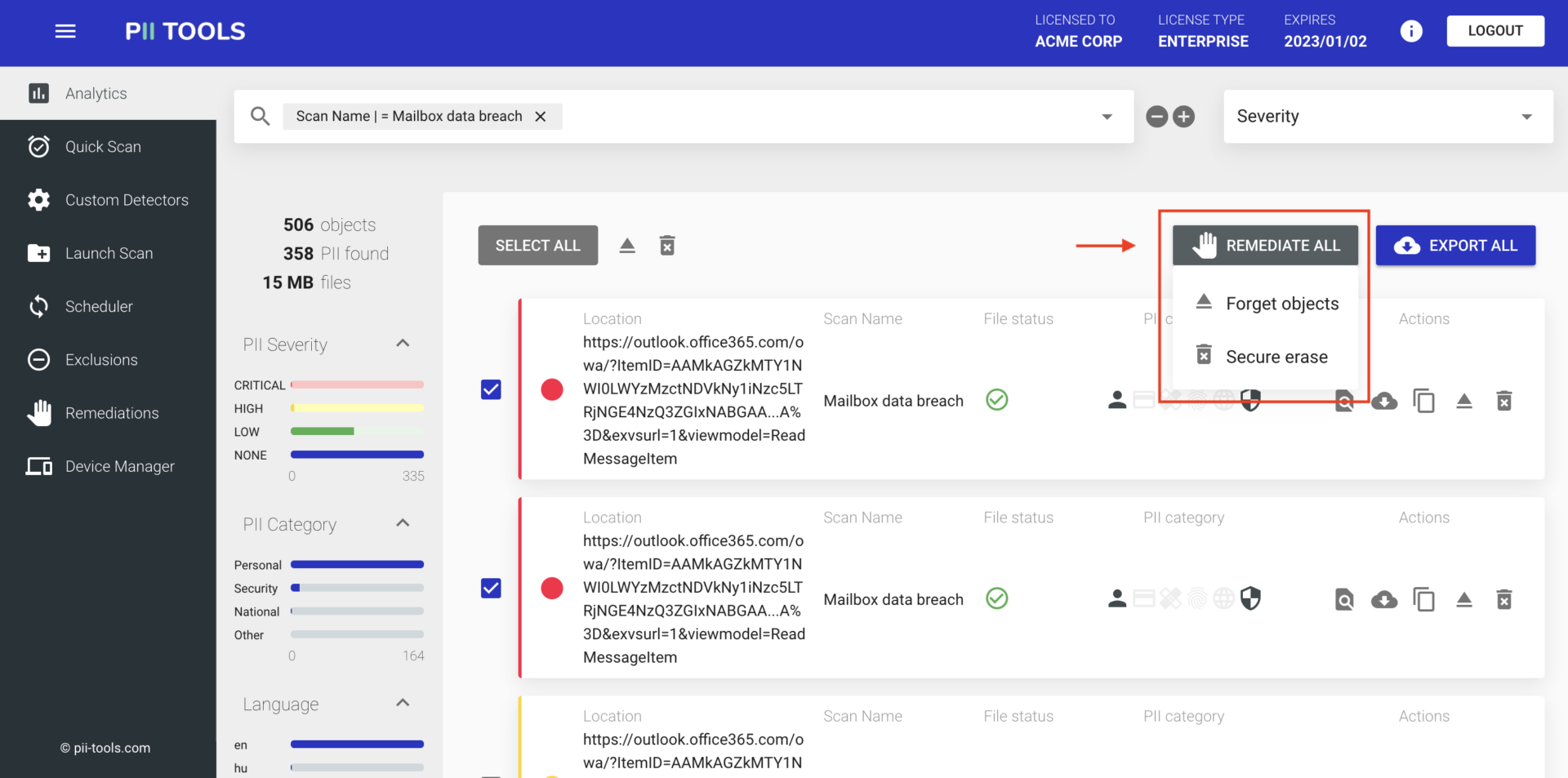
The platform can identify sensitive data across both structured and unstructured repositories, including scanned documents via OCR.
This is especially important for contractors handling procurement paperwork, engineering documentation, HR records, or legacy archives where sensitive information often exists as images rather than searchable text.
New Standard for CMMC & DFARS Compliance
In the federal sector, periodic audits and manual spreadsheets are no longer sufficient for demonstrating ongoing compliance readiness. Organizations are increasingly expected to maintain continuous visibility into how sensitive data is stored, processed, and governed across their infrastructure.
This is especially important as contractors prepare for mandatory third-party assessments and stricter procurement requirements under NIST SP 800-171 and CMMC frameworks.
By embedding continuous sensitive data discovery directly into their infrastructure, organizations can:
- reduce compliance blind spots,
- simplify audit preparation,
- and strengthen their overall governance posture.
All without compromising control over their sensitive data.
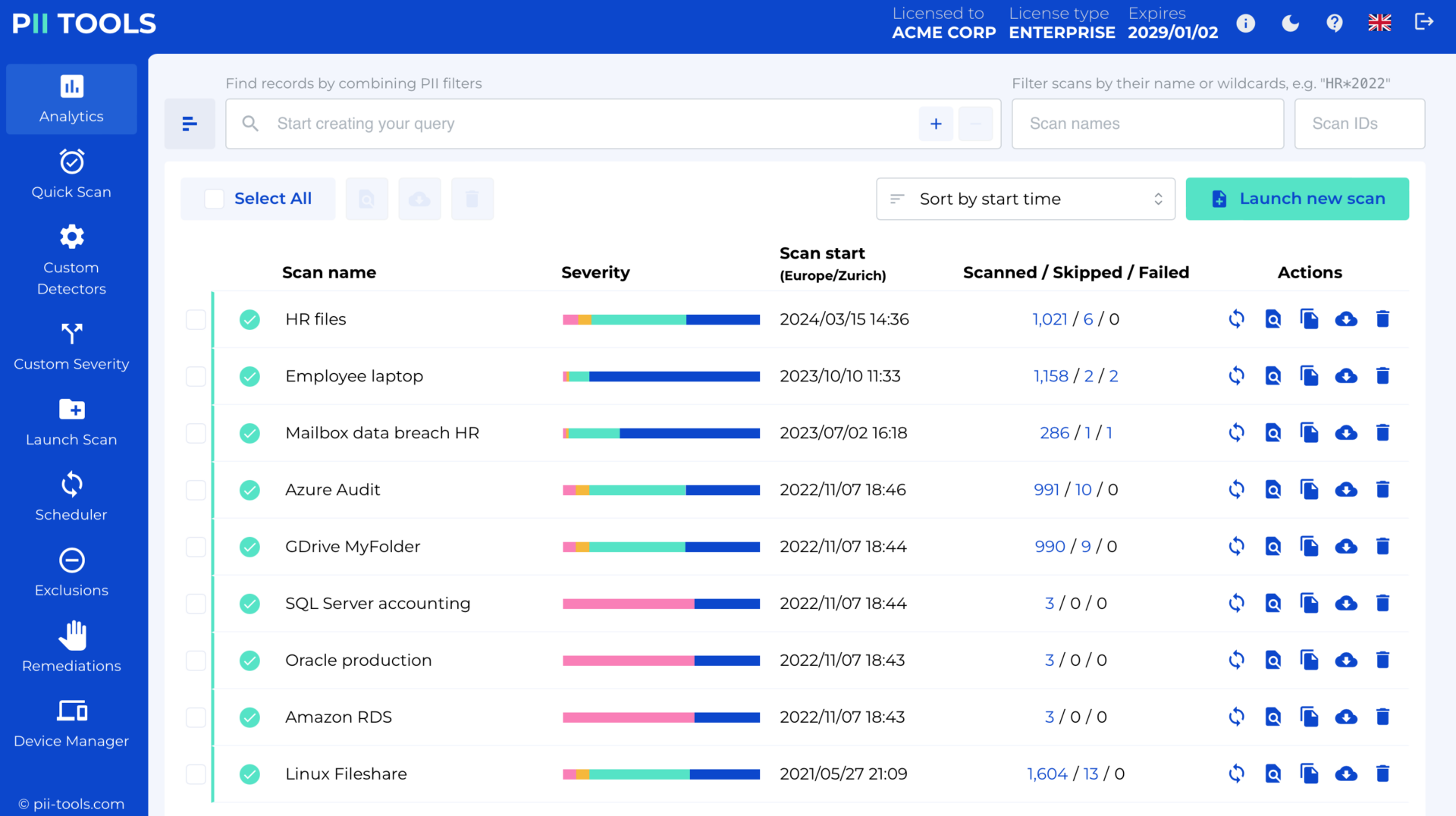
To see how a PII Scanner works in practice, explore how PII Tools automates CMMC and DFARS compliance in on-premise and isolated environments.
Schedule an Air-Gapped Demo with our US engineering team.
Frequently Asked Questions (FAQ)
What is CMMC compliance?
CMMC is the U.S. Department of Defense cybersecurity certification framework for contractors handling Federal Contract Information (FCI) or Controlled Unclassified Information (CUI).
Why is sensitive data discovery important?
You cannot protect sensitive data you cannot find. Continuous discovery helps locate CUI, PII, and other regulated information across your environment, improving security and audit readiness.
Can PII discovery run in an air-gapped environment?
Yes. PII Tools supports on-premises, Private Cloud, hybrid, and fully air-gapped deployments with zero data egress.
Why is OCR important?
Many sensitive records exist as scanned PDFs, engineering drawings, and image files. Native OCR detects data that text-only scanners cannot.
What is PII Tools?
PII Tools is sensitive data discovery software, so you can discover, analyze, and remediate PII across all your digital assets, on premises or on your Private Cloud. Schedule a FREE DEMO and secure your PII for good!