






The new year is already upon us, and it comes stocked with sweeping PII protection and data security updates. These are the TOP 3 data regulation changes you need to know for your business in 2026 and beyond!
#1. The AI Act
Starting in the European Union, we already have the enforcement date for The AI Act: August 2, 2026. The AI Act’s 2-year provisional period is set to end on this day, meaning there’s still a bit of time to implement its requirements, although not much.
The AI Act provides a framework for businesses and institutions to “foster responsible artificial intelligence development and deployment in the EU”. It’s known for its criteria of Four Risk Levels used to determine if an AI tool is safe, as well as its Code of Practice, set to go into effect six months later.
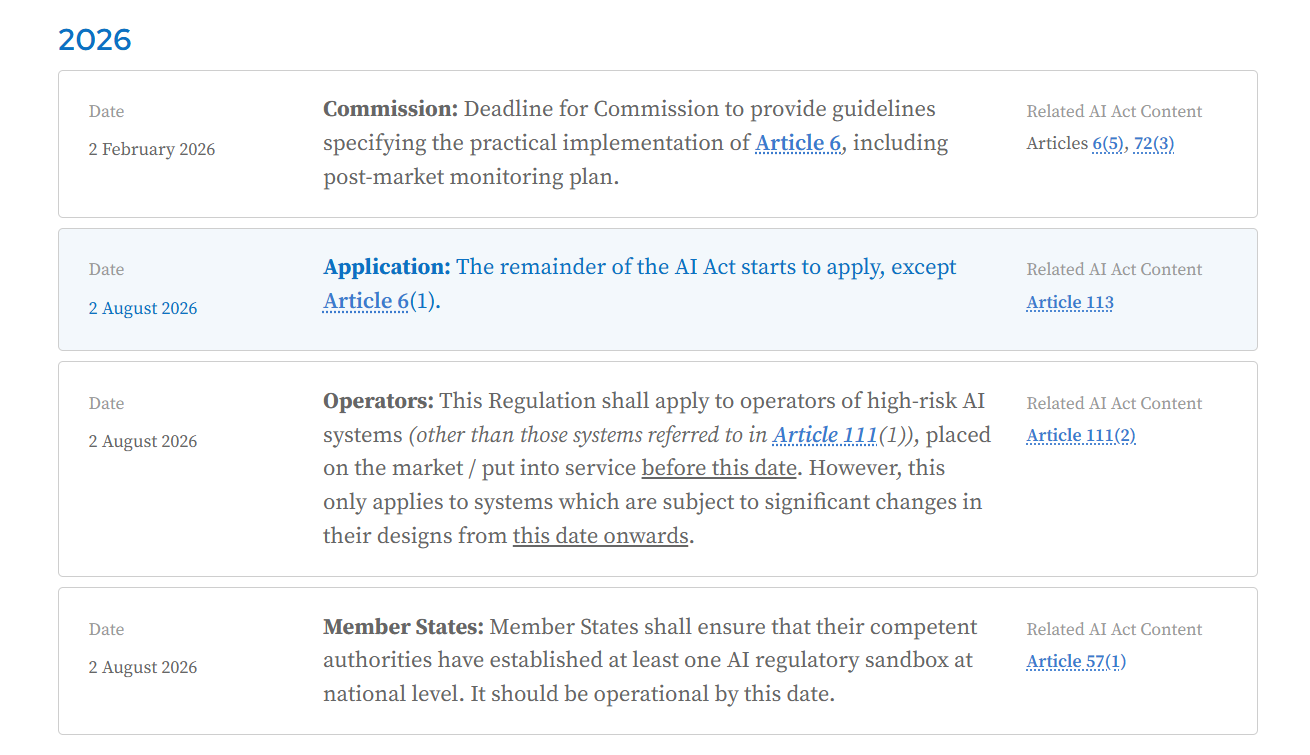
Source: EU Artificial Intelligence Act
If you use AI helpers or models of any kind in your business, then learn everything you can in our article AI Regulations – Staying Ahead of the Curve with the AI Act, or even start preparing for its enforcement in Prepare for the EU AI Act.
#2. CPPA – California Delete Act
The California Privacy Protection Agency has been rolling out the California Delete Act in phases since 2024. It was here that the law officially went into effect, requiring data brokers to begin annual registration by the end of the year (learn more about the CPPA here).
As of January 1, 2026, the second phase has now been added. This phase is significant as it introduced the new Delete Request and Opt-Out Platform (DROP) for California consumers. This is a state-hosted website allowing residents to submit a single, verifiable request to all registered data brokers to have their PII deleted. Just like that, all in one fell swoop.
But that’s not all. Six months later, by August 1, 2026, all data brokers must begin accessing the DROP platform every 45 days at least to retrieve and process all deletion requests. And this quite likely pertains to you, considering the CPPA defines ‘data brokers’ as “any business that knowingly collects and sells consumers’ personal information to third parties without a direct relationship with the consumer”.
#3. GDPR
Although the GDPR has acted as the template for almost every major data protection regulation around the world today, it’s also been highly criticized for being overly complex and expensive for businesses to stay up-to-date with.
That’s why the Digital Omnibus Regulation Proposal was put forth in late 2025. Its entire goal is to modernize data protection and cybersecurity rules in the EU by amending the GDPR, NIS2, the Data Act, the AI Act, and more.
By simplifying and streamlining these demanding digital laws, the EU Data Protection Authorities hope to reduce the burden on businesses, increase innovation, and harmonize rules across member states.
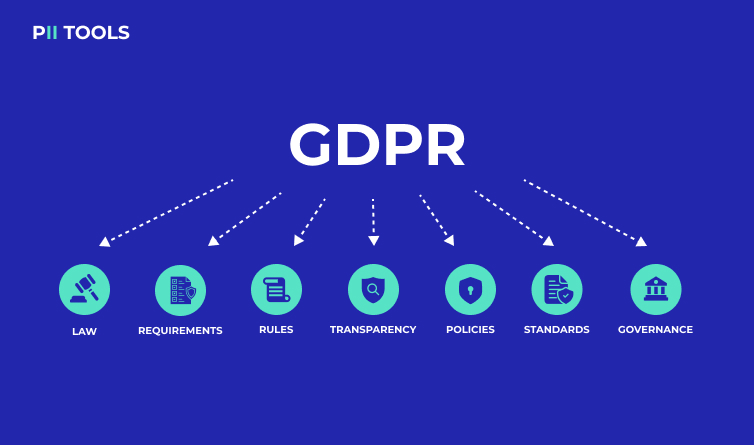
As for now, the Digital Omnibus Regulation Proposal is just that – a proposal. However, it’s currently being reviewed by the European Parliament committees and Member States, with a projected approval timeline of late 2026.
Exactly when and what will be approved is still up for debate, but we’ll be keeping our eyes on this either way. A streamlined GDPR would really shape up the industry in a positive way.
2026 Data Protection Trends
There are a few other notable trends alongside the top 3 data regulation changes in 2026, and they’re already in motion, with safe AI implementation at the forefront. AI governance is now deeply connected to data protection regulation, a reality every business needs to face head-on.
Luckily, tools exist to make using AI and language learning models as safe as possible. For instance, you can use the EU’s free Compliance Checker to see how your third-party AI tools stand. Or the AI Data Protector by PII Tools, which scans datasets for sensitive, protected PII BEFORE you run it through any AI models.
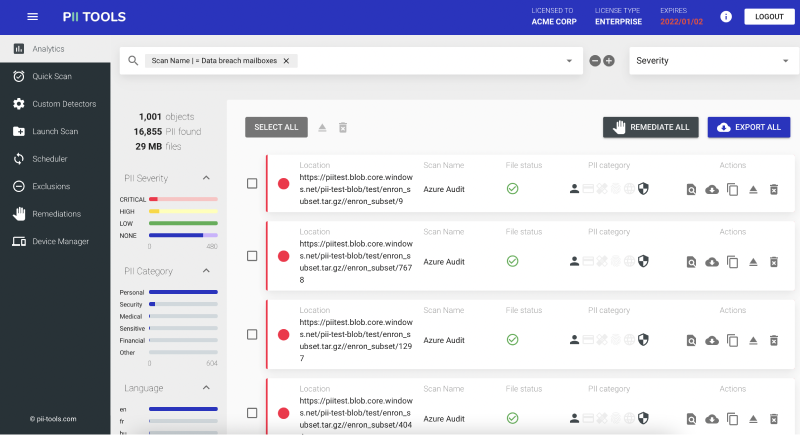
Other notable sensitive data protection trends in 2026 include a sizable shift towards data sovereignty and scrutiny on cross-border data flows. We could even see a restructuring of how organizations view cloud architectures and international transfer mechanisms.
Are You Ready for 2026?
The new year has already arrived, but are you prepared for it? Data protection and PII regulations are often changing and updating, but one necessity always remains the same: the need to discover sensitive data where it stands.
That’s where PII Tools comes in. Because you can’t protect what you can’t find, this sensitive data discovery software allows businesses to discover, analyze, and remediate potentially at-risk data anywhere within their storages.
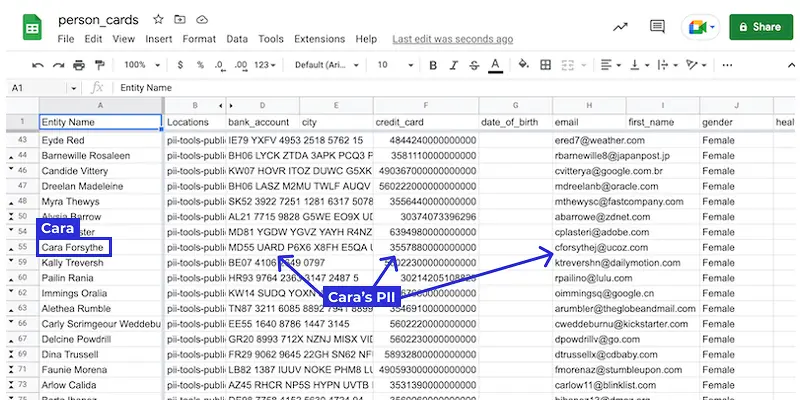
And PII Tools is also ready for 2026 and beyond. Use this software to prepare your business for the top data regulation changes listed above (and more) with relevant features like the AI Data Protector and Person Cards® (exportable reports with all PII on any data subject).
New Year’s Eve has come and gone, but there’s still time to prepare for the top 3 data regulation changes in 2026 and beyond. Get ready for everything that 2026 has to bring with PII Tools and streamline your regulatory compliance!
Don’t Take Our Word For It – Get Hands-on Experience with the FREE PII Tools DEMO!