
Take Control of Your Personal Data in 2026

Cole PrudenData Breaches, Personal Data, Private Data

Take Control of Your Personal Data in 2026

Personal data is no longer just something companies collect. It’s something constantly processed, analyzed, shared, and sometimes exposed.

In 2026, taking control of personal data means understanding how it flows across platforms, AI systems, and cloud environments and using the right tools to manage it.

Whether you’re an individual concerned about privacy or an organization responsible for protecting customer data, here’s what control really looks like today.

Understand What Counts as Personal Data

Many people still underestimate what qualifies as personally identifiable information (PII).

PII includes obvious identifiers like:

  • Full name

  • Email address

  • Phone number

  • Government ID numbers

But also less obvious data such as:

  • IP addresses

  • Device identifiers

  • Location history

  • Biometric data

  • Behavioral profiles

  • AI-generated inferences

Take a look at our PII Examples List for reference.

In modern systems, personal data is often embedded in unstructured files, chat logs, and AI outputs — not just databases.

Understanding this broader definition is step one.

Recognize Where Your Data Actually Lives

In 2026, personal data may exist in:

  • Cloud storage platforms

  • Email systems

  • SaaS tools

  • HR software

  • Customer support logs

  • AI tools and chat systems

  • Shared internal drives

For individuals, this means your data footprint is far larger than you might think.

For organizations, it means manual tracking is no longer realistic.

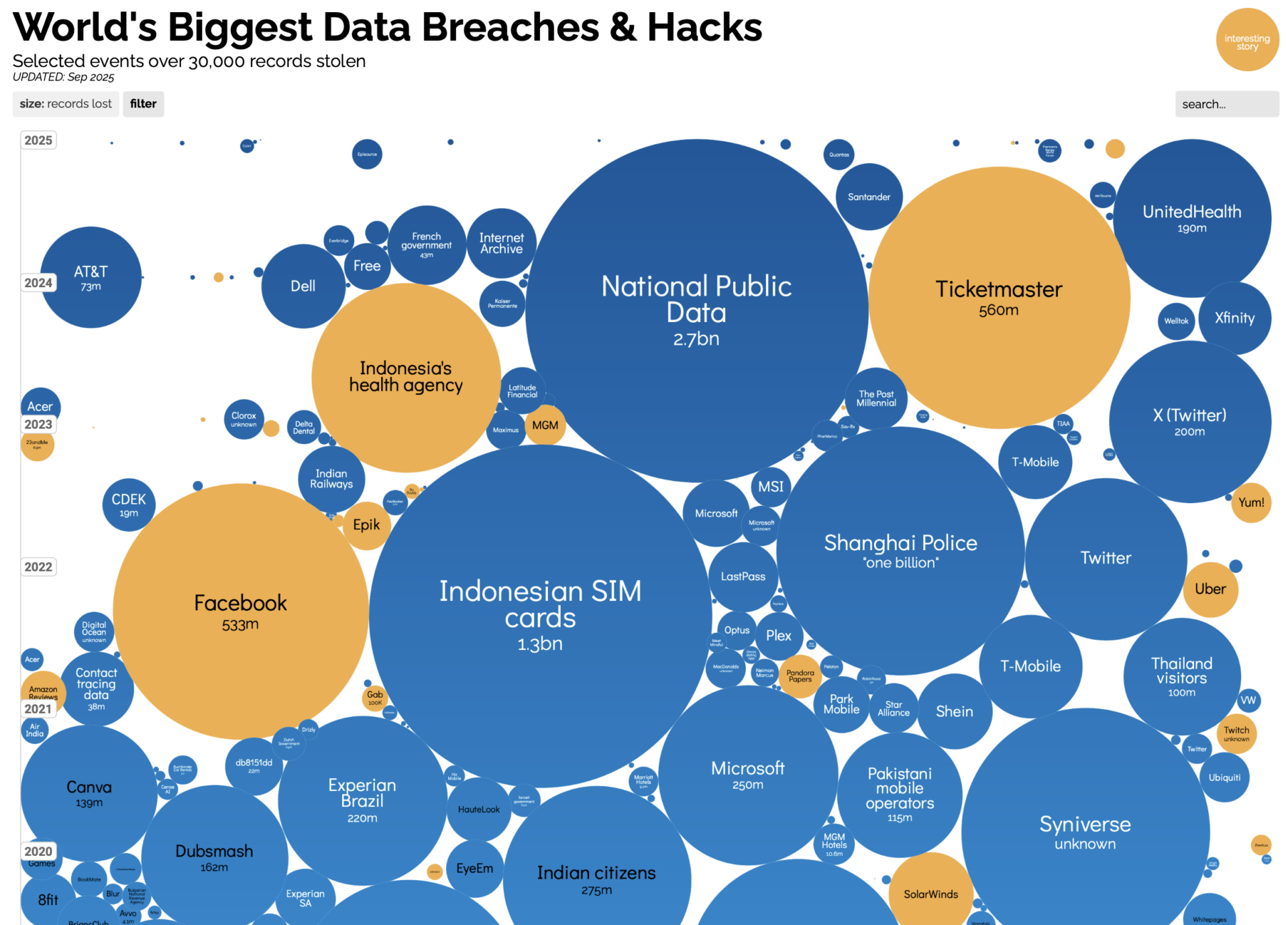
World's Biggest Data Breaches Data Control Article by PII Tools

Source: Information is beautiful

Some may think that large data breaches, unauthorized access, insufficient security measures, etc., are issues faced by the service providers, not the clients. However, these expectations aren’t always met. So, is there anything you, the user, can do to take control of your data?

Luckily, there is. The best way to keep your personal data under control is to vet any company you’re entrusting it to thoroughly. The obvious place to start is reading through their privacy policy. But what other safeguards should you be looking for when deciding to put your faith (and your data) in any establishment in 2026?

#1: Compliance

Does this company prioritize compliance when collecting and storing data? Does it adhere to only one or two regulations like the GDPR, HIPAA, PCI DSS, GLBA, etc. (you’d hope all of them)? Does it implement automized tools to discover potentially at-risk data and enforce rules to have such data removed or stored correctly?

It would help to ask yourself these questions about any company storing your PII. No matter their location in the world, businesses are obliged to follow, maintain, and stay up-to-date with every single regulation pertaining to their users. Therefore, always check for data regulation certifications before trusting any corporation with your private information.

Compliance today requires more than policies. It requires visibility.

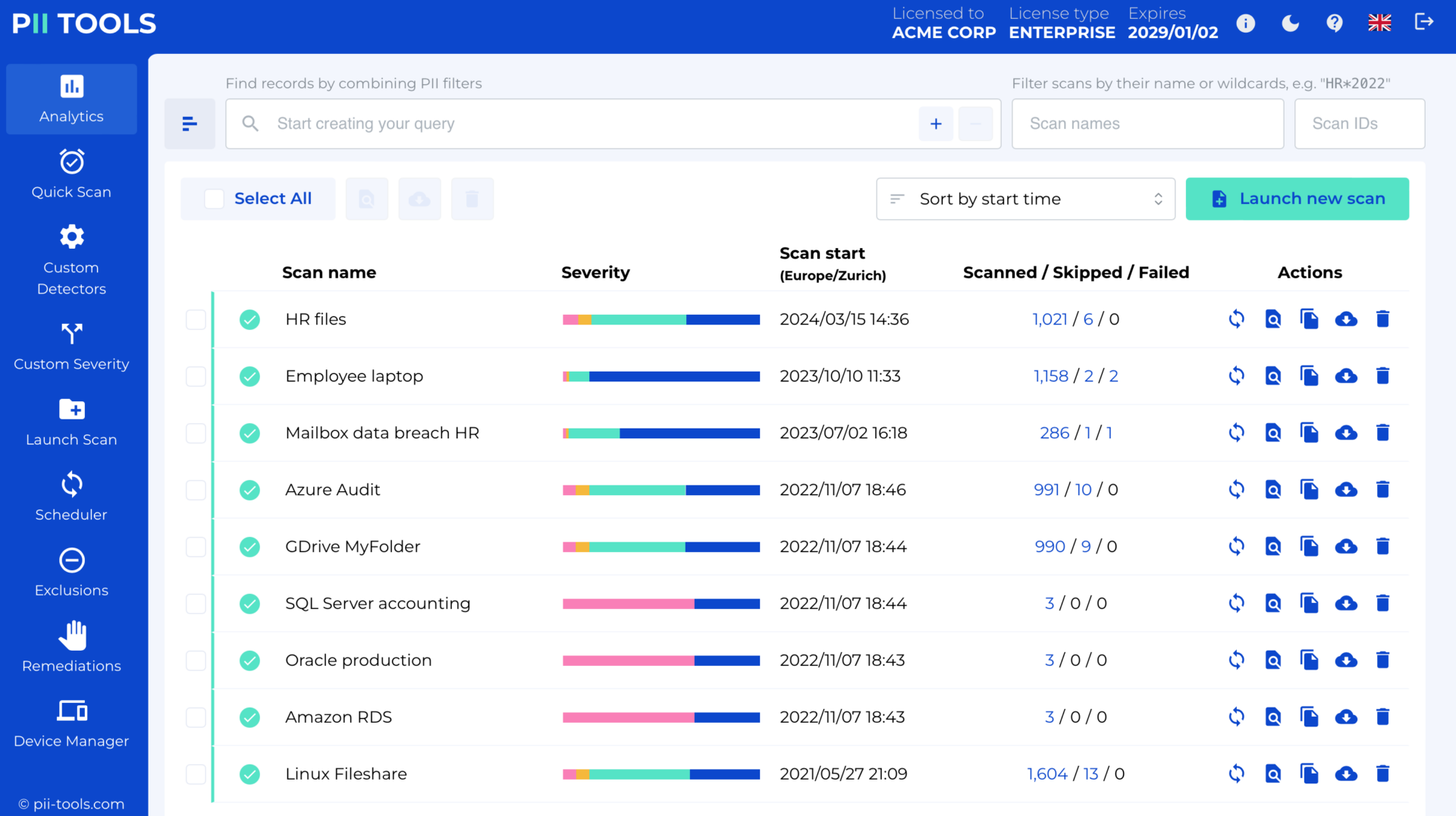
Modern PII Scanner and PII Detector tools help organizations continuously identify and classify personal data across structured and unstructured environments, making compliance operational rather than theoretical.

#2: Security

Just because a company barely meets the requirements of the GDPR doesn’t mean they’ve stopped looking for other shortcuts or ways to save money when storing user data. That’s why you should always investigate the type of data storage security they provide.

Although there are other options, cloud storage is undoubtedly taking the lead as the safest and most modern way of storing user data. Not only do the cloud servers provide file encryption, but the servers themselves are typically located in warehouses with severely limited access.

Personal data is one of the most targeted assets in cyberattacks.

Data protection now means:

  • Monitoring unstructured files

  • Scanning cloud storage

  • Detecting sensitive data in AI systems

  • Identifying exposed records

An advanced PII Software solution can function as an ongoing audit layer,  detecting sensitive personal information before it becomes a breach liability.

#3: Regular In-House Audits

Nothing says “we care about the safety of our clients’ data privacy” more than regular in-house audits. This step shows genuine initiative because it requires companies to go well out of their way to inspect and verify their own data storage techniques and ensure that every single file is in the right place.

Of course, companies storing user data are also incentivized to perform regular in-house audits because they expect to be audited by third-party auditors (typically by whichever government agency is relevant to their/your region). But all of this incentivization only works in your favor. More audits equal better data security for you.

Control means knowing:

  • Where personal data lives

  • Who has access

  • How it is processed

  • Whether it appears in AI systems

  • How quickly it can be removed

Features like AI Data Scanner capabilities and visual mapping tools such as Person Cards give organizations a real-time view of data relationships and exposure risk.

Without continuous PII discovery, true control is impossible.

What Are You Waiting For?

Recognizing corporations that truly put the safety of their users’ data first has never been more important. But, unfortunately, we’ve seen far too many data breaches and mismanaged PII scandals over the years to leave our data privacy up to the companies that often stand to EARN MORE by loosening the reigns a little.

Take back control over your personal data this year by performing your own “audit” of the businesses you trust your information to. Do they adhere to data safety regulations, pay extra for exclusively secure data storage platforms, and even regularly inspect their file storages to keep you safe? If they want your business, well, they certainly better. So let 2026 be the year you take your personal data back into your own hands!

Want to Run a Business that Users Can Actually Trust? PII Tools Has Your 2026 Covered!